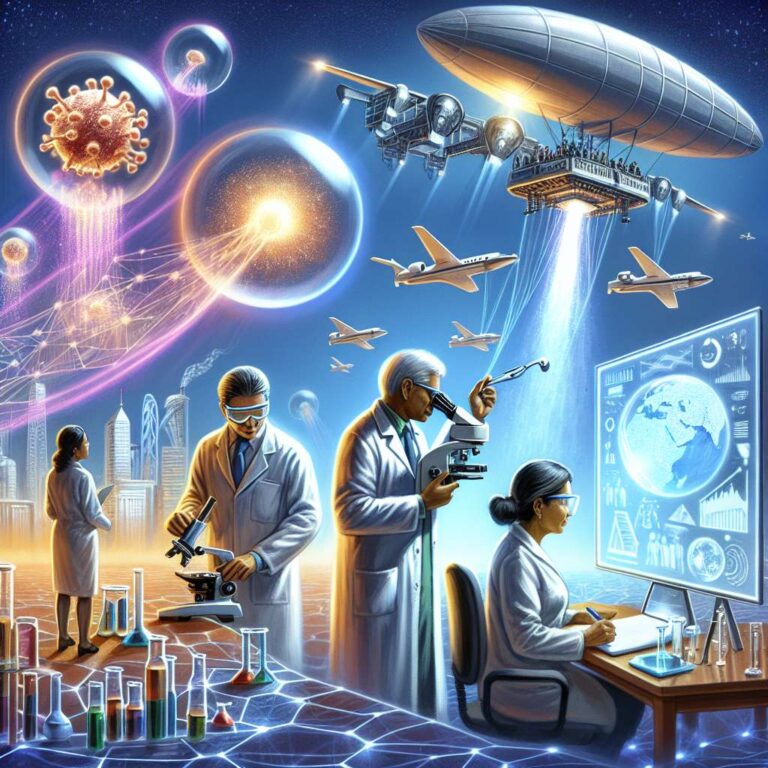
Life Biosciences, a Boston startup founded by Harvard professor and life extension advocate David Sinclair, has received FDA approval to begin the first targeted attempt at age reversal in human volunteers. The company will initially focus on treating eye disease using a rejuvenation strategy known as “reprogramming,” which aims to roll back cellular aging. The concept has rapidly drawn hundreds of millions in investment for Silicon Valley firms such as Altos Labs, New Limit, and Retro Biosciences, which are backed by some of the most prominent figures in technology and see human rejuvenation as a potentially transformative new industry.
A separate push to expand global connectivity is gathering momentum through high altitude platforms designed to beam internet access from the stratosphere. An estimated 2.2 billion people currently have limited or no internet access, primarily in remote regions, and new trials this year of stratospheric airships, uncrewed aircraft, and related systems aim to reduce that number. Although Google shut down its Loon balloon project in 2021, other companies have continued working on alternative high altitude platform stations and now claim they have solved many of Loon’s problems, setting the stage for large scale demonstrations of stratospheric internet delivery starting this year.
In the research world, OpenAI’s new in house group OpenAI for Science has introduced Prism, a free large language model powered tool that embeds ChatGPT directly into a scientific text editor. Prism is designed to sit at the center of the software environment scientists use to write papers, mirroring how chatbots are increasingly integrated into code editors, and effectively enables a kind of “vibe coding” workflow for scientific writing. Other stories highlighted in the newsletter include a Nobel Prize winning chemist’s work on metal organic frameworks to pull fresh water from air, a major lawsuit settlement by TikTok, scrutiny of Artificial Intelligence companies’ political positions, and concerns over how unchecked machine translated content on smaller language editions of Wikipedia is feeding back into Artificial Intelligence training data and threatening vulnerable languages online.