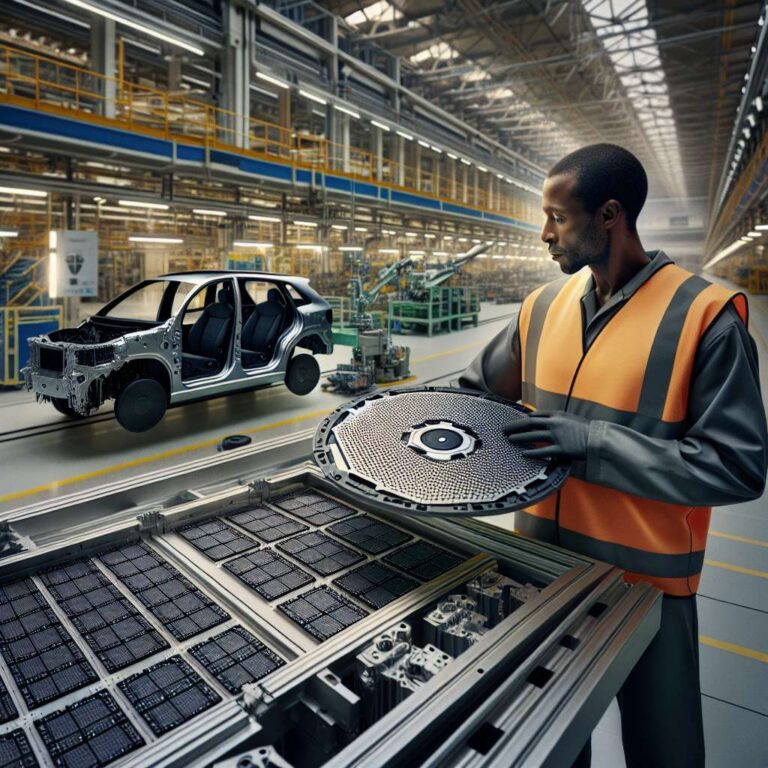
Elon Musk revealed that Tesla is planning a huge in-house chipmaking facility, referred to as a “terafab”, to produce the advanced Artificial Intelligence processors the company needs for self-driving cars and robots. The move comes after Musk said existing suppliers are not delivering enough capacity. Tesla is reportedly talking to Intel as a potential partner for the project.
Tesla’s rationale is that its autonomous vehicle and robotics goals require high-performance, energy-efficient Artificial Intelligence chips. The article notes the current market is dominated by Nvidia for AI accelerators, with key manufacturing handled by foundries such as TSMC and Samsung. Musk described plans for a plant capable of producing at least 100,000 wafers per month. Tesla’s custom “AI5” chip is said to rival Nvidia’s top offerings while using less power and costing less to produce, with production eyed for 2027 and an upgraded “AI6” chip expected about a year later.
The report highlights potential market consequences. A Tesla-built supply chain would be a direct challenge to Nvidia’s leadership in AI hardware and could shift demand among foundries and suppliers. Intel has been positioned as a possible partner and its shares rose by 4% on the news. The article also points out that recent shareholder approval of Elon Musk’s large compensation package signals investor willingness to back Tesla’s ambitious pivot toward in-house Artificial Intelligence hardware. Finally, Tesla’s plan underscores broader industry trends: chipmaking is becoming central to vehicle and robotics development, supply bottlenecks and geopolitical pressures are driving vertical integration, and other automakers or tech companies may follow suit if Tesla proceeds.