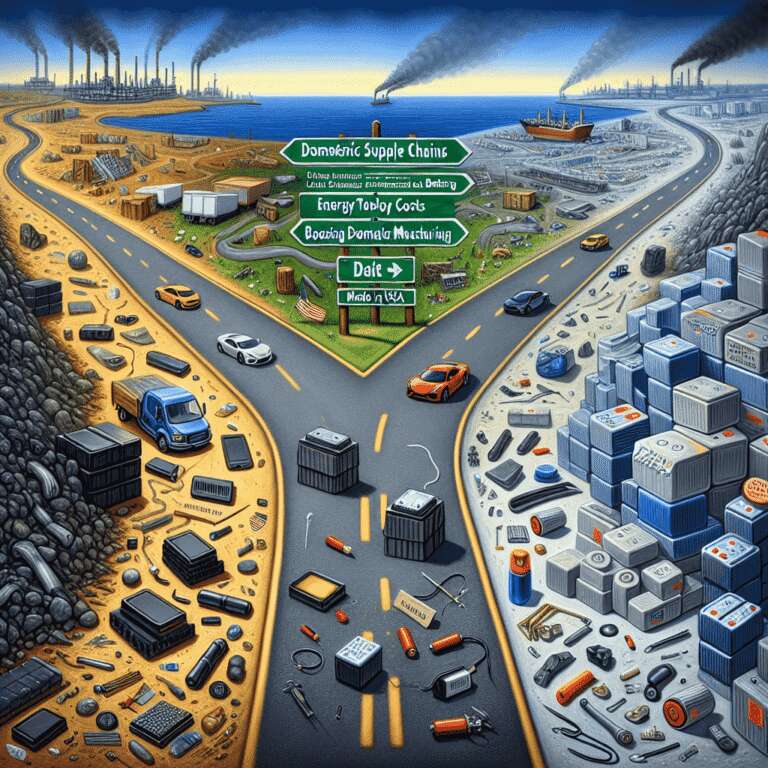
The recent imposition of increased tariffs on imported goods by the US government, spearheaded by former President Donald Trump, brings a new challenge to the global economic landscape, particularly affecting the battery industry. The White House´s decision results in most reciprocal tariffs being paused for 90 days, except for those from China, which now face a tariff rate increase to 125%. This heightened tariff impacts nearly every industry, especially the battery sector where China has a dominant presence in the supply chain.
The tariff escalation could severely impact the battery industry, both in the US and worldwide, given China´s dominance in the production of lithium-ion battery cells. Currently, China produces over 75% of the world’s lithium-ion battery cells, with tariffs potentially increasing to as much as 132% on these products by 2026. This dramatic cost increase could ripple through the economy, making electric vehicles, energy storage installations, and consumer electronics significantly more expensive.
While US-based battery manufacturers could theoretically benefit from the higher tariffs imposed on Chinese imports, the reality is more complex due to the widespread reliance on imported components. As the country still imports the majority of lithium-ion batteries from China, this dependency underscores the challenge of bolstering domestic production amidst such economic shifts. The prevalent uncertainty caused by these tariffs complicates long-term investments in the industry, posing a threat to the planning and expansion of battery production in the US. Companies remain cautious, waiting to see how these economic policies unfold.