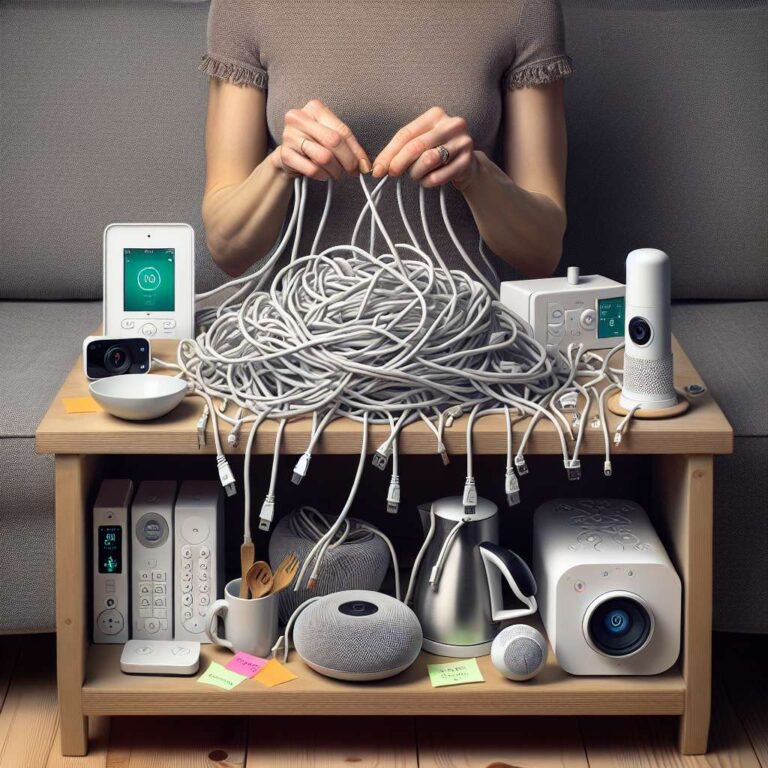
Early smart home products promised effortless automation but delivered fragmented systems, confusing apps and frequent reliability issues. Consumers struggled with devices that did not work well together, required constant troubleshooting and often failed basic tasks like turning lights on or off consistently. The gap between marketing and reality left many households with underused gadgets and a perception that the smart home was more hassle than help. Companies relied heavily on cloud connectivity and rigid routines, which made systems feel brittle, slow and dependent on stable internet connections.
A new generation of smart home platforms is emerging that centers on large language models and other artificial intelligence techniques to handle more complex, conversational interactions and dynamic decision making. Instead of manually programming scenes and rules, users can describe desired outcomes in natural language, and systems can translate those requests into coordinated actions across devices. Artificial intelligence models are being embedded in hubs, speakers and appliances to recognize patterns in behavior, anticipate needs and adjust settings automatically over time. Vendors are emphasizing on-device processing for speed and privacy, while still using cloud services for heavier workloads and updates.
Major technology firms and startups are racing to integrate artificial intelligence into every layer of the smart home stack, from voice assistants and cameras to thermostats and kitchen appliances. New features include multimodal interfaces that combine voice, touch and vision, as well as context awareness that takes into account time of day, occupancy and user preferences to refine automation. Interoperability standards are slowly improving, enabling different brands to share data and coordinate more effectively under a single artificial intelligence driven control layer. The shift aims to transform the smart home from a collection of disconnected gadgets into a cohesive, adaptive system that feels more intuitive, less maintenance intensive and genuinely helpful in everyday life.