
SK hynix showcases full-stack Artificial Intelligence memory portfolio at OCP Global Summit

SK hynix presented its full-stack Artificial Intelligence memory lineup at the 2025 OCP Global Summit, highlighting a 12-layer HBM4 with doubled I/O and more than 40% improved power efficiency. The exhibit included HBM, AiM, DRAM, and eSSDs sections with live demonstrations.

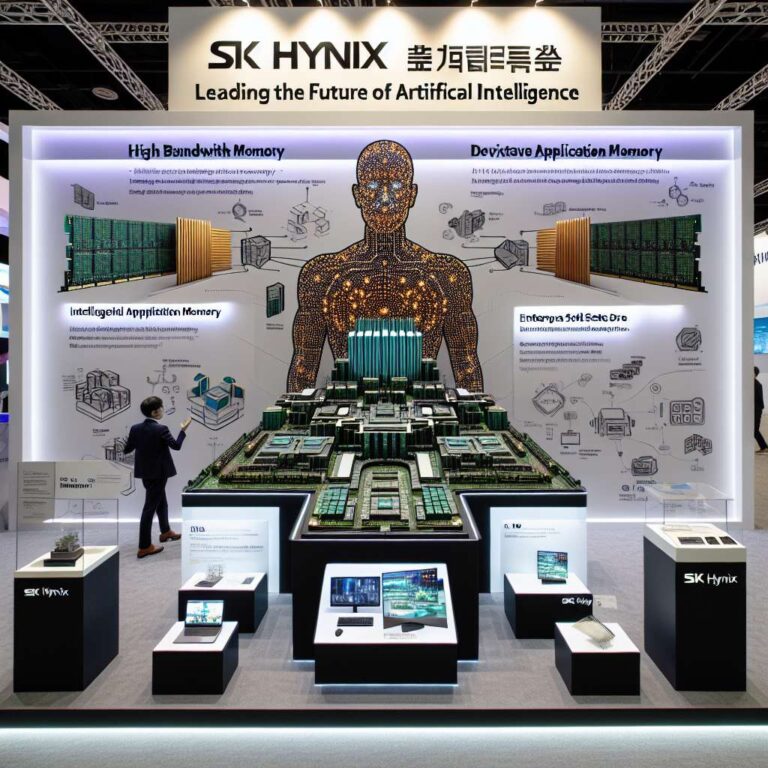
SK hynix showcased its full-stack Artificial Intelligence memory portfolio at the 2025 OCP Global Summit in San Jose, California, held October 13 to 16. The event was hosted by the Open Compute Project, the world’s largest open data center technology collaboration community, and ran under the theme “Leading the Future of Artificial Intelligence.” SK hynix exhibited under the slogan “MEMORY, Powering Artificial Intelligence and Tomorrow,” and the company said the display was intended to address emerging trends in data center and Artificial Intelligence infrastructure.

The company’s interactive booth was organized into four sections covering HBM, AiM, DRAM, and eSSDs and featured product-based character designs, three dimensional models of key technologies, and live demonstrations. The centerpiece was SK hynix’s 12-layer HBM4. According to the company, it became the first in the world to complete development of HBM4 and establish a mass production system in September 2025. The HBM4 product features 2,048 input/output channels, twice that of the previous generation, and is described as offering increased bandwidth and more than 40 percent greater power efficiency.

SK hynix framed these technologies as optimizations for ultra-high-performance Artificial Intelligence computing systems and broader data center applications. By exhibiting a grouped portfolio that spans high-bandwidth memory, application integrated memory, conventional DRAM, and enterprise SSDs, the company emphasized improvements in both performance and energy efficiency for Artificial Intelligence workloads and data center infrastructure. The demonstrations and technical displays at the summit were presented as part of the company’s effort to advance industry solutions for next generation computing environments.
64

Impact Score

U.S. senators propose broader chip tool export ban for Chinese firms

A bipartisan proposal in the U.S. Senate would shift semiconductor equipment controls from specific fabs to targeted Chinese companies and their affiliates. The measure is aimed at cutting off access to advanced lithography and other wafer fabrication tools for firms such as Huawei, SMIC, YMTC, CXMT, and Hua Hong.

Trump executive order targets state Artificial Intelligence laws

Executive Order 14365 lays out a federal strategy to discourage, challenge, and potentially preempt state Artificial Intelligence laws viewed as burdensome. Employers are advised to keep complying with current state and local rules while preparing for regulatory uncertainty in 2026.

Who decides how America uses Artificial Intelligence in war

Stanford experts are divided over how the United States should govern Artificial Intelligence in defense, surveillance, and warfare. Their views converge on one point: decisions with such high stakes cannot be left to companies alone.

GPUBreach bypasses IOMMU on GDDR6-based NVIDIA GPUs

Researchers from the University of Toronto describe GPUBreach, a rowhammer attack against GDDR6-based NVIDIA GPUs that can bypass IOMMU protections. The technique enables CPU-side privilege escalation by abusing trusted GPU driver behavior on the host system.

Contact Us

Got questions? Use the form to contact us.

Contact Form

Clicking next sends a verification code to your email. After verifying, you can enter your message.