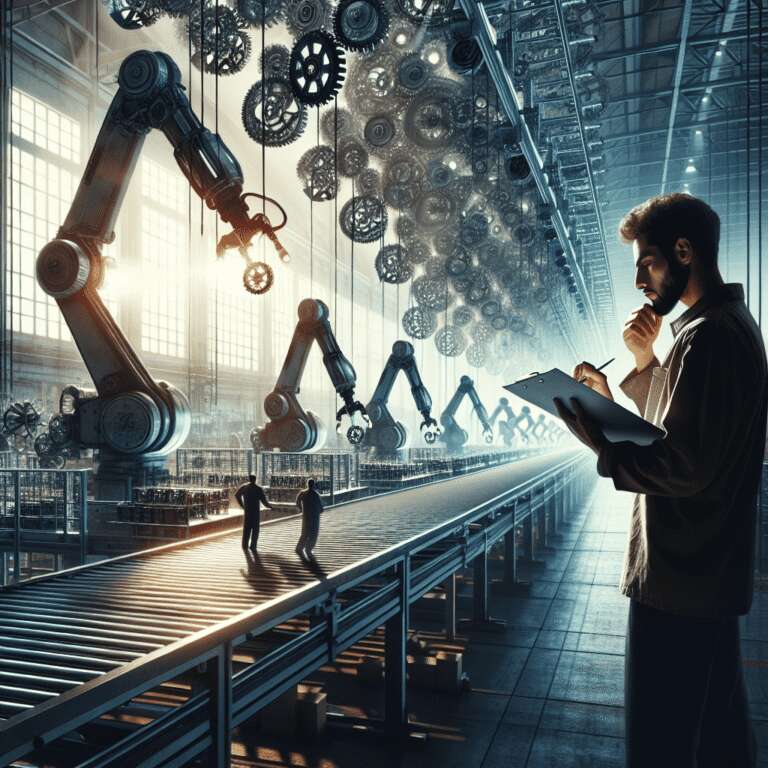
Industrial Artificial Intelligence is rapidly transforming manufacturing by reimagining how factories operate, innovate, and scale. The convergence of Artificial Intelligence, simulation technologies, and digital twins holds the potential to significantly boost productivity, flexibility, and insight across the industry. Siemens, in collaboration with NVIDIA, is at the forefront of this movement by introducing advanced automation solutions that are accessible not only to large enterprises but increasingly to smaller manufacturers as well.
Matthias Loskyll, Siemens´ head of virtual control and industrial Artificial Intelligence for Factory Automation, highlighted on the NVIDIA AI Podcast the partnership´s vital role as the manufacturing sector faces critical challenges. These include labor shortages, a widening skills gap due to retirements, and a growing demand for resilient and efficient production systems. Artificial Intelligence advancements are now capable of automating tasks that were previously too variable or complex, while the deployment of digital twins allows designers to model and optimize safe, efficient interaction between Artificial Intelligence-powered robots and smart environments.
Siemens´ Inspekto, an Artificial Intelligence-driven visual quality inspection system, empowers even small companies to automate defect detection on their production lines with minimal training data, significantly lowering the barrier to entry for sophisticated manufacturing technology. Meanwhile, automaker Audi employs industrial Artificial Intelligence in its daily production, using Siemens’ suite to automate weld-spot inspection and achieving up to 25 times faster inference directly onsite. Siemens is also pioneering the development of AI-driven vision software for robotic manipulation of arbitrary objects and Industrial Copilots, powered by NVIDIA NIM microservices, to provide generative Artificial Intelligence assistance directly to shop floor operators while keeping sensitive production data secure. These initiatives signal a significant leap forward in real-time manufacturing intelligence, productivity, and adaptability.