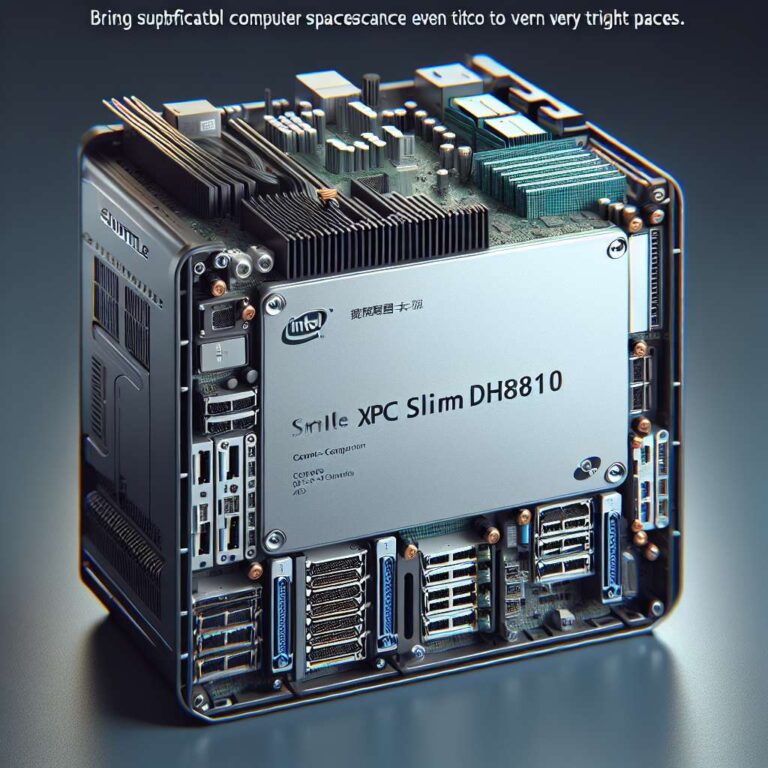
Shuttle has introduced the DH810, a new member of the XPC slim family that compresses significant compute into a very small footprint. The barebone measures just 1.35 liters, positioning it as a space-saving option for constrained racks, kiosks, cabinets and other tight deployments. Shuttle presents the DH810 as a robust build for demanding it environments, with emphasis on on-device processing and low-latency tasks.
The DH810 supports Intel Core Ultra 200 processors, including configurations with up to 24 cores, split into eight performance cores and 16 efficiency cores; the platform accepts chips with a maximum tdp of 65 watts. Shuttle also integrates a dedicated npu on the board so workloads that require neural processing can run locally rather than in the cloud. That local processing capability reduces response times and helps limit the exposure of sensitive data, advantages that matter in installations that must balance performance with security and privacy.
Memory capacity is handled via two so-dimm slots, allowing up to 96 gb of ddr5 ram, which creates headroom for heavy multitasking and for running multiple inference or media pipelines concurrently. Shuttle presents the DH810 as suitable for fields such as digital signage, industrial control and other edge applications where compute density, resilience and continuous operation are priorities. The combination of a modern Intel platform and an on-board npu targets workloads that benefit from both general-purpose cores and specialized acceleration.
Form factor and connectivity choices make the DH810 an option for integrators who need a small but capable base system to build from. Shuttle markets the unit as a barebone, meaning buyers can populate storage and memory to their needs and integrate the system into larger solutions. The DH810 represents a move toward more capable, compact edge systems that bring machine learning inference closer to sensors and screens, minimizing latency while maintaining a small physical and operational footprint.