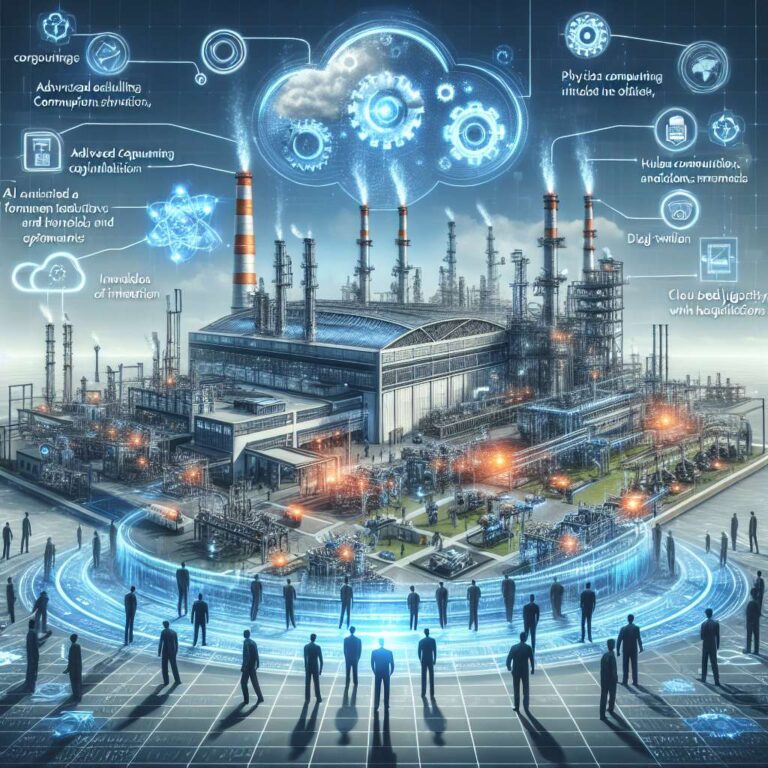
Manufacturing is undergoing a systems upgrade as Artificial Intelligence amplifies existing technologies such as digital twins, the cloud, edge computing, and the industrial internet of things. Digital twins provide physically accurate virtual representations of equipment, production lines, processes, or whole factories, enabling teams to test, optimize, and contextualize complex real-world environments without disrupting operations. Indranil Sircar, global chief technology officer for the manufacturing and mobility industry at Microsoft, says, “Artificial Intelligence-powered digital twins mark a major evolution in the future of manufacturing, enabling real-time visualization of the entire production line, not just individual machines.”
Practical implementations show how integrated views can drive measurable gains. A digital twin of a bottling line can combine one-dimensional shop-floor telemetry, two-dimensional enterprise data, and three-dimensional immersive modeling into a single operational view, improving efficiency and reducing costly downtime. Jon Sobel, co-founder and chief executive officer of Sight Machine, notes that many high-speed industries face downtime rates as high as 40 percent and that tracking micro-stops and quality metrics via digital twins lets companies target improvements with greater precision. Sight Machine partners with Microsoft and NVIDIA to turn complex industrial data into actionable insights that save productivity without interrupting production.
Adoption of Artificial Intelligence in production is rising. Sircar estimates up to 50 percent of manufacturers are currently deploying Artificial Intelligence use cases, up from 35 percent reported in a 2024 MIT Technology Review Insights survey. Larger manufacturers were significantly ahead, with 77 percent already deploying use cases, according to the report. Observers in the field argue that manufacturing’s extensive data sets make the sector a natural fit for Artificial Intelligence, enabling a shift from reactive, isolated problem-solving to proactive, systemwide optimization across factory operations.