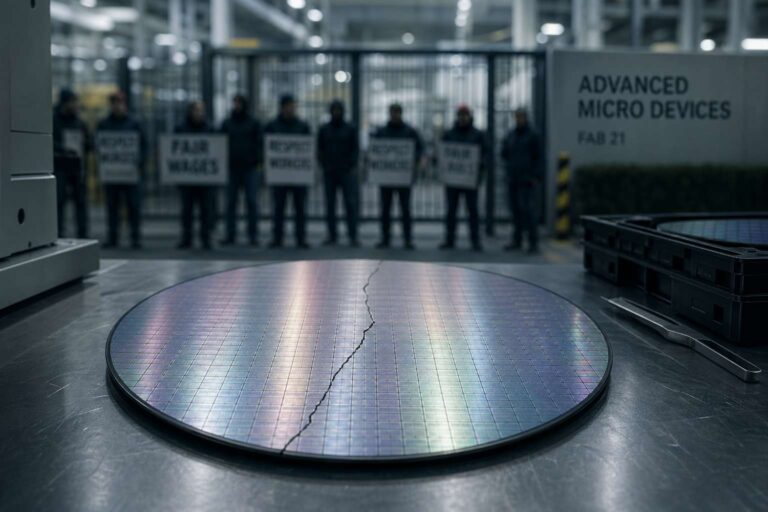
Samsung Electronics is facing a possible labor union strike next month, raising concerns about production disruptions and long-term damage to its global reputation as a reliable chip supplier. The dispute stems from disagreements between management and labor unions over compensation structures. Workers are demanding the removal of a cap on performance-based bonuses and a more transparent calculation system. Specifically, they want the rule limiting bonuses to 50 per cent of annual salary scrapped and are asking for 15 per cent of operating profits to be allocated to bonuses.
The potential losses are significant. According to economist Song Heon-jae, a shutdown of chip plants could cost Samsung “tens of billions of won per minute,” amounting to roughly USD 677 million per day. A prolonged strike could cut as much as 10 trillion won from chip operating profits. Yet the bigger threat is reputational. Samsung’s standing as a stable supplier could weaken if production disruptions continue, and global big tech clients could begin looking at alternative suppliers such as TSMC as part of efforts to spread risk. In the semiconductor industry, where process verification takes enormous time and money, customers who leave are difficult to win back.
Early signs of disruption have already appeared. During a recent night shift rally involving around 40,000 union members at the Pyeongtaek chip complex, production performance dropped sharply. Memory fabs saw an 18.4 per cent decline, while foundry fabs experienced a steep 58.1 per cent fall between 10 p.m. and 6 a.m. The figures suggest that even limited labor action can significantly affect output. Major clients such as Advanced Micro Devices and Nvidia prioritize supply stability, and any uncertainty could encourage them to diversify suppliers.
The planned walkout is expected to begin on May 21, starting with a gathering near Samsung Chairman Lee Jae-yong’s residence in Seoul’s Yongsan district. If it proceeds, this would be only the second general strike in Samsung’s history since its founding in 1969. The first occurred in July 2024 and lasted 25 days. The dispute comes at a sensitive moment for the industry, where even short setbacks can lead to lost market share and missed opportunities, especially in the fast-moving Artificial Intelligence chip sector. Song warned that semiconductor technology can lose competitiveness after falling behind by just one or two years, making the labor conflict a broader test of Samsung’s position in the global chip industry.