As artificial intelligence adoption accelerates worldwide, data centers are facing rapid growth in computational workloads that increasingly prioritize both performance and energy efficiency. The shift from large scale model training to continuous inference means systems must sustain heavy artificial intelligence workloads over long periods while keeping power consumption in check. This changing usage pattern is driving strong interest in low power memory technologies that can support nonstop artificial intelligence services without overwhelming data center energy budgets.
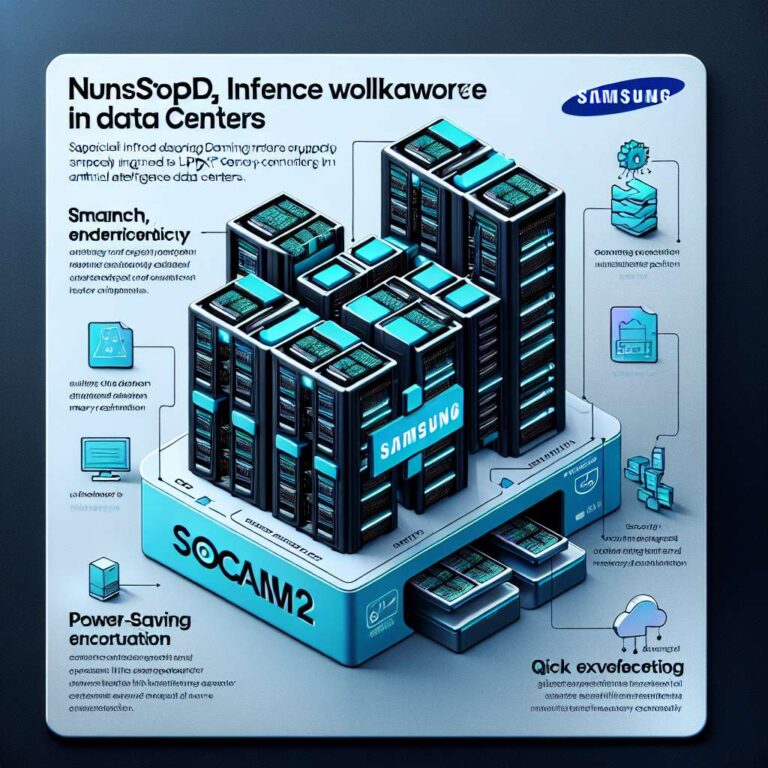
Responding to this trend, Samsung has introduced SOCAMM2, short for Small Outline Compression Attached Memory Module, as a new LPDDR based server memory option for artificial intelligence data centers. The company states that SOCAMM2 is already being sampled to customers, signaling that the design has progressed beyond early concept stages and into practical evaluation by server makers. By building on LPDDR technology, which is traditionally known for lower power consumption compared to conventional server memory, Samsung is positioning SOCAMM2 as a component that can help operators balance performance and efficiency in artificial intelligence servers.
SOCAMM2 combines the inherent low power benefits of LPDDR with a modular, detachable form factor designed for flexible system integration. According to Samsung, this approach allows the module to deliver higher bandwidth and improved power efficiency while also making it easier for system designers to configure and scale memory within artificial intelligence server platforms. The company emphasizes that this combination of bandwidth, energy savings, and modular design is intended to enable artificial intelligence servers to achieve greater overall efficiency and scalability as data centers adapt to the demands of continuous inference workloads.