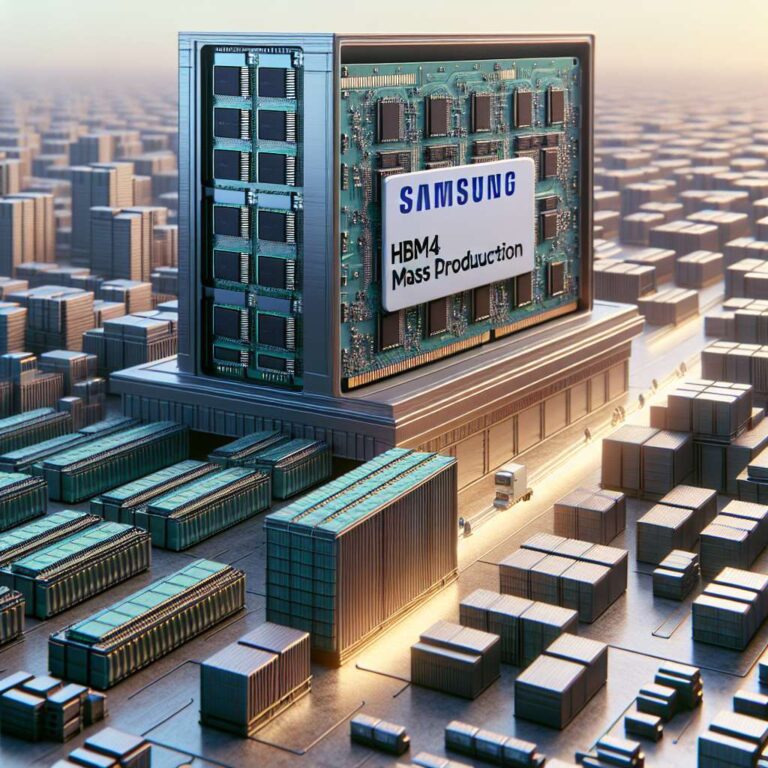
Samsung Electronics announced that it has begun mass production of its HBM4 memory and has already shipped commercial products to customers, becoming the first company in the industry to reach this milestone. The launch secures an early leadership position for Samsung in the HBM4 market, which targets high performance computing and artificial intelligence workloads that demand significantly higher memory bandwidth and efficiency.
To achieve this, Samsung is using its most advanced 6th-generation 10 nanometer (nm)-class DRAM process (1c), which it says delivers stable yields and industry leading performance from the very start of mass production, and this was accomplished without any additional redesigns. The company emphasizes that this proactive move to the latest process node is intended to underpin both performance and manufacturability as demand for high bandwidth memory accelerates in data centers and artificial intelligence infrastructure.
Samsung departed from the conventional approach of relying on existing proven designs and instead adopted leading edge technologies such as the 1c DRAM node and a 4 nm logic process for HBM4. According to Sang Joon Hwang, Executive Vice President and Head of Memory Development at Samsung Electronics, leveraging process competitiveness and design optimization provides substantial performance headroom. The company positions this headroom as key to meeting customers’ escalating requirements for higher performance in artificial intelligence computing when they need it.