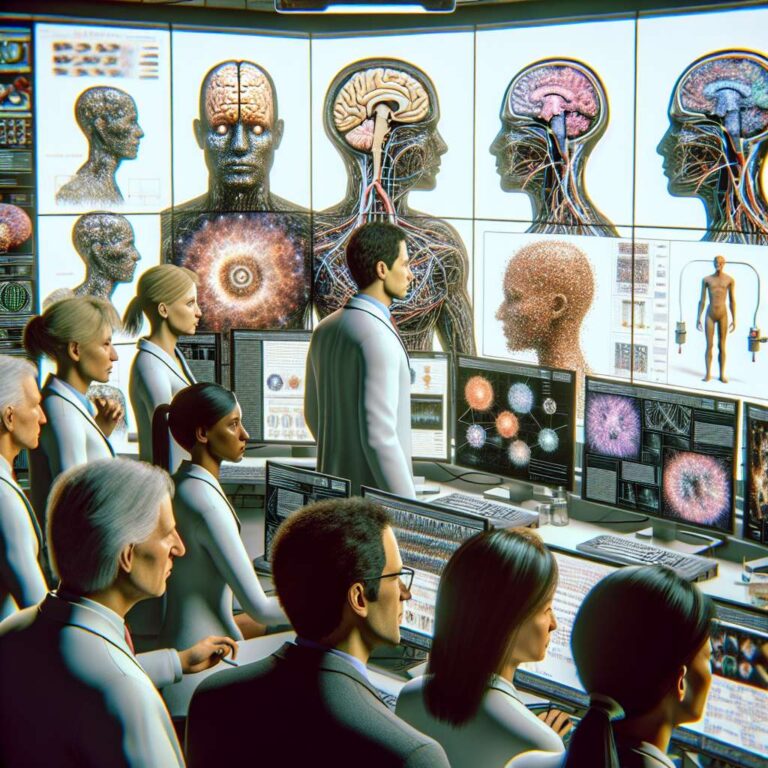
The newsletter opens by describing how researchers are increasingly treating large language models as if they were unknown organisms, likening them to “city-size xenomorphs” that humanity now coexists with. These systems are portrayed as so vast and complex that nobody, including their own creators, fully understands what they are, how they function, or what they are truly capable of. This lack of understanding is framed as a serious problem, as hundreds of millions of people now use this technology every day despite these unresolved questions about its inner workings and limitations.
To address this knowledge gap, scientists are applying methods inspired by biology and neuroscience, an approach often referred to as mechanistic interpretability. They are studying the internal mechanisms of these models in a systematic way, similar to dissecting and mapping the structure and behavior of a living organism. The piece notes that this interpretability work is strange and surprising, revealing that large language models are even more unusual than researchers had initially assumed. The story has also been adapted into an MIT Technology Review narrated podcast, and mechanistic interpretability is highlighted as one of the publication’s 10 Breakthrough Technologies for 2026, underscoring its perceived importance to the future of Artificial Intelligence research.
The newsletter then shifts to a profile of Italian neurosurgeon Sergio Canavero, who has spent years promoting the idea of radical procedures often described as head transplants, potentially involving transferring a sick person’s head or brain onto a younger, healthier body. Canavero drew attention in 2017 when he announced that a team he advised in China had exchanged heads between two corpses, but he failed to convince skeptics that his technique could work on living patients or that a live operation was truly imminent. Although he has since receded from public view, the concept of head transplants is depicted as persisting on the fringes, where it is reportedly being revisited by life extension advocates and stealth Silicon Valley startups. The newsletter closes with additional curated links on topics such as social media addiction lawsuits, surging power demand from data centers, expanding data collection by TikTok, disputes over online anonymity, the use of Artificial Intelligence to improve Artificial Intelligence, experiments with two-tier internet systems, realistic expectations for humanoid robots, and the continued use of pneumatic tube systems in hospitals.