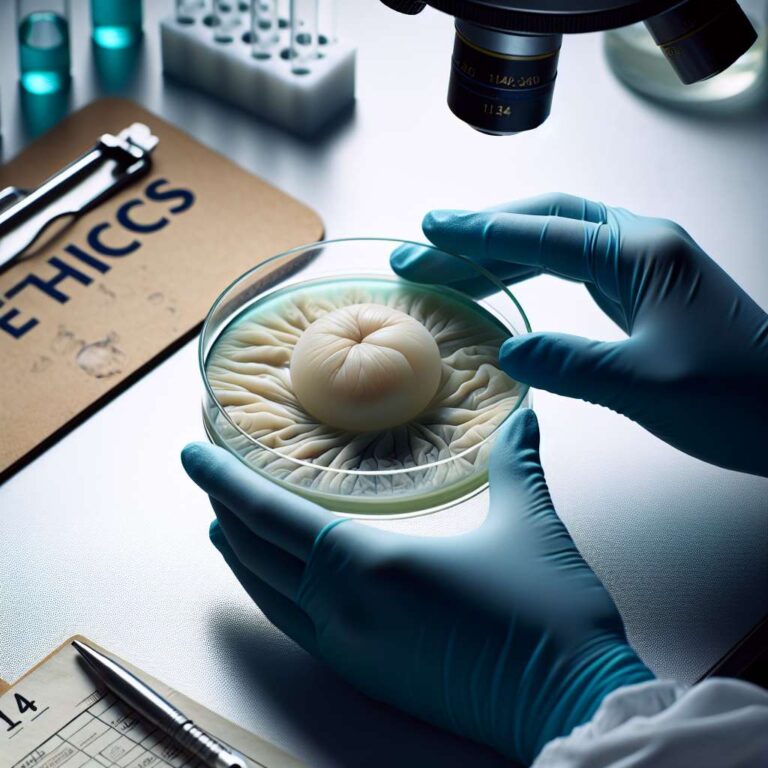
Researchers in China, Europe, and the United States have created what they describe as the most accurate laboratory models yet of the earliest stages of human pregnancy. In three new papers published by Cell Press, teams report merging human embryos from in vitro fertilization centers, as well as embryo mimics called blastoids, with three-dimensional organoids grown from endometrial cells that mimic the uterine lining. Using transparent microfluidic chips and silicone chambers with nutrient channels, scientists were able to directly observe embryo-like structures pressing into and attaching to these uterine organoids, visually recreating implantation, which is the moment that pregnancy begins.
The studies aim to address a critical weak point in in vitro fertilization, where embryos often fail to attach to the uterus. By combining embryos or blastoids with endometrial organoids, the teams generated a controlled model of the first bond between mother and embryo. In each experiment, development was halted when the embryos were two weeks old, if not sooner, in line with legal and ethical limits that typically restrict growth beyond 14 days. The Beijing group tested about 50 donated in vitro fertilization embryos and carried out around 1,000 additional experiments with blastoids, which are made from stem cells and are easier to produce in large numbers while facing fewer ethical restrictions than true embryos.
The Beijing researchers designed a soft silicone chamber with tiny channels to supply nutrients and a space for the uterine organoid to grow, then introduced blastoids or real embryos through a window to initiate a laboratory “pregnancy.” This platform is being positioned not only as a research tool but as a potential basis for medical applications. Startups such as Dawn Bio and Simbryo Technologies are already commercializing related organoid systems, with Simbryo saying it will offer “personalized” in vitro fertilization predictions by adding blastoids to organoids grown from a patient’s uterine biopsy to assess receptivity. The Beijing team further tested 1,119 approved drugs on organoids derived from women with repeated in vitro fertilization failures; they report that avobenzone increased the chance that a blastoid would start implanting from just 5% of the time to around 25% of the time, and they hope to move toward clinical trials if a suitable drug candidate emerges.
Researchers are now working to make the implantation models more realistic by adding missing components such as immune cells, blood vessels, and pumps to establish rudimentary circulation in the chip devices. These advances could allow embryos or blastoids to be grown for longer periods in vitro and have prompted debate over how far laboratory pregnancy models might ultimately go. Some observers see the work as an early step toward ectogenesis, or development outside the body, although the scientists involved emphasize that incubating a human to term in the lab is not currently possible. One contributor notes that while the technology is related to the conceptual idea of an artificial womb, it is still far from that capability and remains firmly in the realm of science fiction.