
Reinforcement Learning Pioneers Win Turing Award for AI Breakthroughs

Foundational work in reinforcement learning by Barto and Sutton earns top honor, impacting today´s Artificial Intelligence innovations.

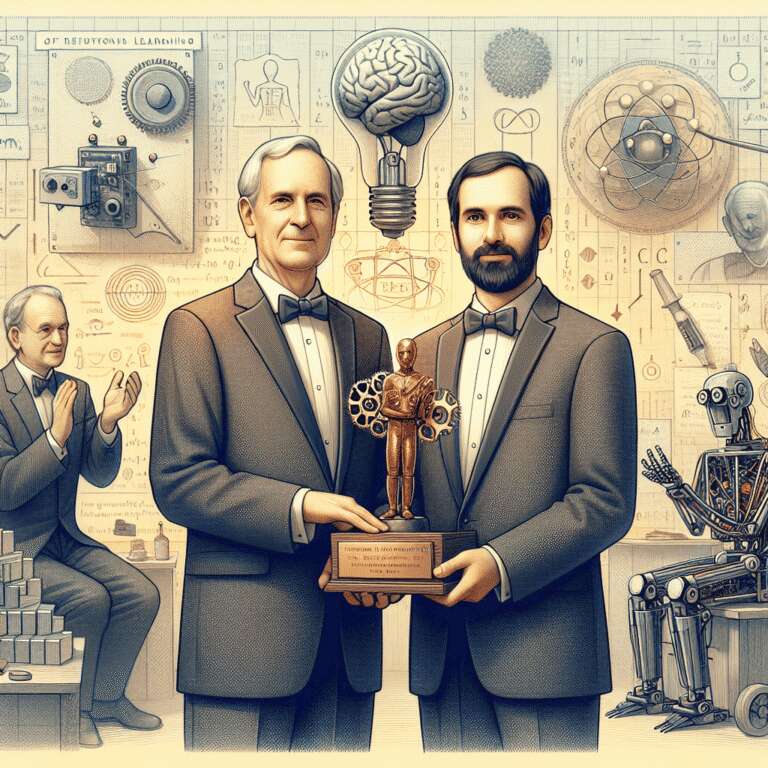
Machine learning pioneers Andrew Barto and Richard Sutton have won the 2024 Turing Award, which is the computing field’s highest honor comparable to the Nobel Prize. Their work in reinforcement learning has been pivotal for developing advanced AI systems like Google DeepMind´s AlphaGo. This award shines a spotlight on the significant impact of their foundational research, which has translated theoretical concepts into practical, real-world applications.

Their pioneering research focused on teaching machines through trial and error, a principle that is now central to modern AI development. Despite being conceptualized long before the current AI boom, Barto and Sutton’s work laid the groundwork for AI systems capable of achieving superhuman performance in complex tasks. This recognition underscores how breakthroughs in today´s AI are deeply rooted in long-standing research endeavors.

The Turing Award, conferred by the Association for Computing Machinery, celebrates contributions of lasting importance in computing. Barto, who was surprised by the news during a Zoom call, is currently retired in Cape Cod, Massachusetts. This acknowledgment elevates reinforcement learning as an essential branch of machine learning, distinct from the more commonly employed supervised learning methods that dominate many commercial AI solutions. It illustrates how crucial foundational research can lead to transformative technological achievements over time.
88

Impact Score

UK and EU Artificial Intelligence regulatory outlook for May 2026

The UK is moving ahead with targeted Artificial Intelligence measures in policing, online safety, cyber security and copyright policy, while the EU is refining how the EU Artificial Intelligence Act will apply in practice. Consultations, new offences and implementation deadlines are shaping the next phase of compliance on both sides.

Germany sets out national implementation of the Artificial Intelligence Act

Germany has published a draft law to implement the European Artificial Intelligence Act through new supervisory structures, clearer institutional responsibilities, and measures designed to support innovation. The proposal puts the Federal Network Agency at the center of enforcement while preserving sector-specific oversight in sensitive fields.

ECB warns banks about new Artificial Intelligence security risks

The European Central Bank has called major banks to an emergency meeting over cybersecurity risks tied to advanced Artificial Intelligence models. Regulators want banks to speed up security updates as newer tools make it easier to find and exploit vulnerabilities.

Contact Us

Got questions? Use the form to contact us.

Contact Form

Clicking next sends a verification code to your email. After verifying, you can enter your message.