
The Power Challenge Behind Artificial Intelligence´s Growth

As Artificial Intelligence energy needs surge, experts weigh the capabilities of nuclear, renewables, and fossil fuels to keep its data centers running.

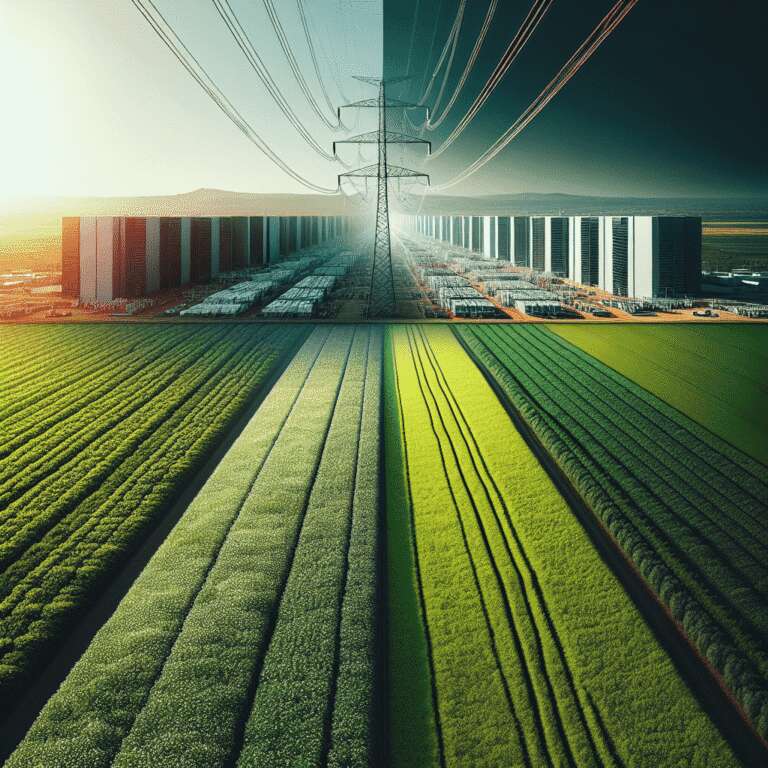
The rapid rise of Artificial Intelligence is driving a significant increase in electricity demand, particularly from the data centers required to run and train advanced models. Recent investigations, including a comprehensive analysis featured in the ´Power Hungry´ package, highlight the immense challenge of sourcing reliable energy to meet Artificial Intelligence’s around-the-clock requirements. While training models may be adjusted to fit renewable energy availability, query-driven deployment needs constant uptime, which complicates reliance on sources like solar and wind unless paired with costly energy storage solutions.

Nuclear power is often touted as a potential answer due to its stable, continuous power output. However, expanding nuclear capacity is neither simple nor swift. Although tech companies can support the revival or enhancement of existing nuclear plants, such efforts only offer modest gains. For example, upgrades at Washington’s Columbia Generating Station could increase output by just over 10 percent in the coming years, an insufficient step compared to the scale of projected demand. Building entirely new nuclear facilities would take decades, making it unlikely that nuclear energy alone can meet industry needs in the near future.

In the absence of rapid nuclear expansion or scalable storage for renewables, natural gas is currently filling the gap. This has substantial implications for climate commitments, as new gas plants built to support Artificial Intelligence data centers could remain operational well beyond 2050, challenging international targets for cutting greenhouse emissions. However, there is hope for a greener future if major tech companies leverage their market influence—by adjusting energy use during peak periods, advocating for carbon capture technology, and demanding emissions controls, they could substantially shape how the digital future is powered. Ultimately, how society chooses to meet the growing electricity needs of Artificial Intelligence will have profound consequences for global climate goals.
74

Impact Score

Tesla plans terafab for Artificial Intelligence chips

Tesla is moving toward a large-scale chip manufacturing project to support its autonomous driving roadmap. Elon Musk said the terafab effort for Artificial Intelligence chips will launch in seven days and may involve Intel, TSMC and Samsung.

Timeline traces evolution, civilisation and planetary stewardship

A sweeping chronology links cosmology, evolution, human history and modern environmental risk in a single long view of the human condition. The sequence culminates in contemporary debates over climate change, biodiversity loss and artificial intelligence governance.

Wolters Kluwer report tracks Artificial Intelligence shift in legal work

Wolters Kluwer’s 2026 Future Ready Lawyer findings show Artificial Intelligence has become a foundational tool across law firms and corporate legal departments. The survey points to measurable time savings, revenue growth, and rising pressure to strengthen training, ethics, and security.

Anthropic March 2026 release roundup

Anthropic rolled out a broad set of March 2026 updates across Claude Code, the Claude Developer Platform, Claude apps, and enterprise partnerships. Changes focused on larger context windows, workflow improvements, reliability fixes, visual output features, and new partner enablement programs.

China renews push to lead in technology and Artificial Intelligence

China’s 15th five-year plan elevates science and technology as core national priorities, with a strong emphasis on self-reliance and Artificial Intelligence. The blueprint signals heavier investment, broader industrial support, and a more confident bid to shape global technology standards.

Contact Us

Got questions? Use the form to contact us.

Contact Form

Clicking next sends a verification code to your email. After verifying, you can enter your message.