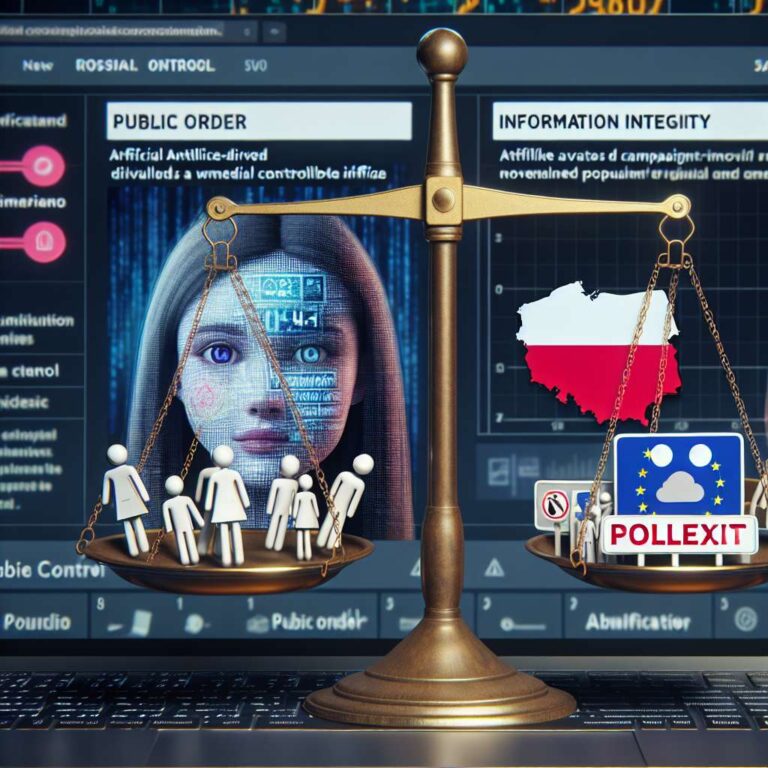
The polish government has requested formal action from the european union against tiktok over a wave of artificial intelligence generated videos urging Poland to leave the european union and criticising the pro eu government of prime minister Donald Tusk. The clips, highlighted by polish information security group Res Futura Data House, feature artificial intelligence generated avatars of young women dressed in Polish national symbols and delivering targeted messages to young Poles. Some videos explicitly promote “polexit,” while others attack the current government, and the channel’s profile included an anti eu slogan associated with radical right politician Grzegorz Braun, a key supporter of Poland exiting the bloc.
Deputy digital affairs minister Dariusz Standerski said that “in recent days, TikTok has seen a surge of videos generated using AI, spreading disinformation regarding Poland’s membership in the European Union. The scale of this practice may suggest that we are dealing with an organised campaign”. Government spokesman Adam Szłapka declared that “there is no doubt that this was Russian disinformation” and pointed to Russian syntax in some of the spoken texts. Standerski sent a letter to Henna Virkkunen, the european commissioner responsible for tech sovereignty, security and democracy, urging her to open proceedings against tiktok under the eu’s digital services act, arguing that the videos “pose a threat to public order, information security, and the integrity of democratic processes in Poland and across the European Union”.
In the letter, Standerski warned that “available information suggests that TikTok has not implemented adequate mechanisms for moderating AI-generated content” and that the platform has not provided “effective transparency measures regarding the origin of such materials”, which he says undermines the goals of the digital services act on disinformation and user protection. The regulation took effect in 2022 and sets accountability and transparency rules for large digital services, and earlier this month X was fined €120 million for non compliance. The account posting the artificial intelligence generated polexit content has since been removed by tiktok following numerous user complaints, but investigative outlet Konkret24 reports that the channel has been active since May 2023, only rebranding into a Polish language, polexit focused operation on 13 December 2025. The controversy comes amid opinion polls showing that 25% of Poles now support leaving the eu, with rising backing for Braun and his Confederation of the Polish Crown party, even as a clear majority still prefers to remain in the union.