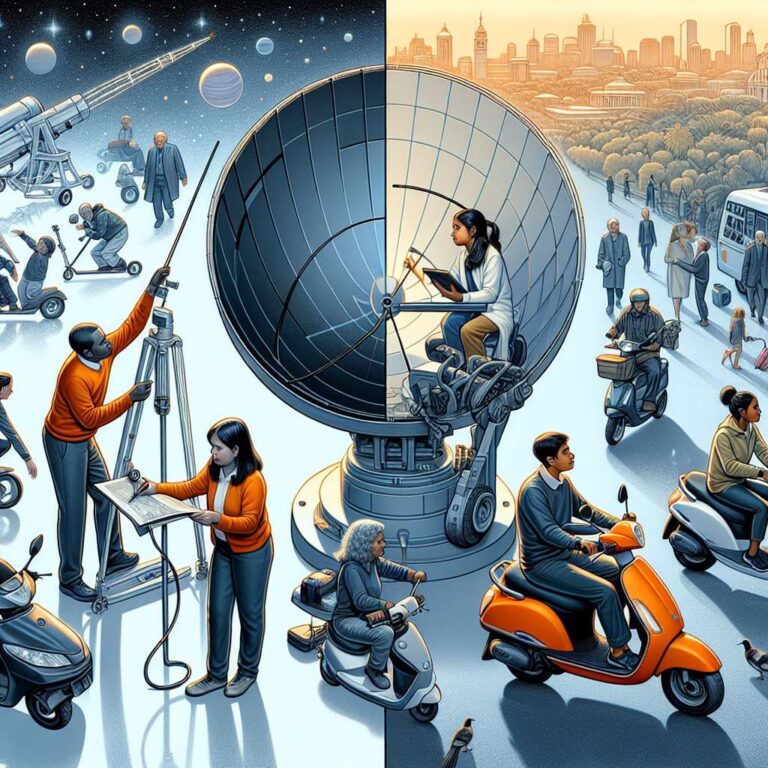
Rebecca Jensen-Clem, an astronomer at the University of California, Santa Cruz, is advancing ground-based planet detection at Hawaii’s Keck Observatory, where a 33-foot mirror made of 36 segments reflects images of uncharted worlds. Her work confronts significant Earth-bound obstacles, including wind and fluctuations in atmospheric density and temperature. In a lab among the redwoods, she and her students test new technologies and software to counter these distortions and see deeper into space. The profile is part of the forthcoming print issue focused on the body.
In climate tech, Ather Energy’s premium e-scooters underscore how India’s green transition is being led by two-wheelers rather than cars. As one of the country’s earliest pure play e-scooter makers, Ather has propelled micromobility adoption and helped move riders away from carbon-emitting vehicles. The company is featured on a list of 10 climate tech firms to watch in 2025, highlighting its role in accelerating electric mobility across India.
Today’s curated reads span policy, Artificial Intelligence, and consumer tech. The Trump administration has laid off thousands of federal health workers, attributing the move to the government shutdown, while labor unions sue and experts warn the Centers for Disease Control and Prevention units focused on disease surveillance could be decimated. Families are pushing back against Artificial Intelligence videos of deceased celebrities, increasing pressure on OpenAI to limit what its Sora 2 video tool can generate. Sora was downloaded over a million times in less than five days, outpacing ChatGPT’s early adoption. Other highlights include the Dutch government taking control of a Chinese-owned chipmaker after Beijing tightened rare earth export rules, skepticism from some developers who say Artificial Intelligence coding tools introduce subtle bugs, police urging teens to drop an Artificial Intelligence “homeless man” prank, the ongoing fallout for Tesla from Elon Musk’s alignment with Trump, positive results after Australian schools banned phones, Artificial Intelligence prowess at detecting small earthquakes, climate change driven hybrid species, and the gamified economics of dating on Hinge. A CDC employee called the layoffs emotionally devastating and dangerous to the public.
One more thing: Maryland’s record fatal overdoses in 2021 prompted state health officials and police to enlist the National Institute of Standards and Technology. Research chemist Ed Sisco’s team applied techniques to detect trace amounts of drugs, explosives, and other hazardous materials, improving safety for those collecting samples. A pilot uncovered critical information almost immediately, offering a clearer picture of changes in street drug supply.