
OpenAI: Stargate Norway set to become the eu´s Artificial Intelligence gigafactory

Stargate Norway will house 100,000 nvidia GPUs and 230mw of renewable data centre capacity to power the next wave of Artificial Intelligence breakthroughs and regional economic growth.

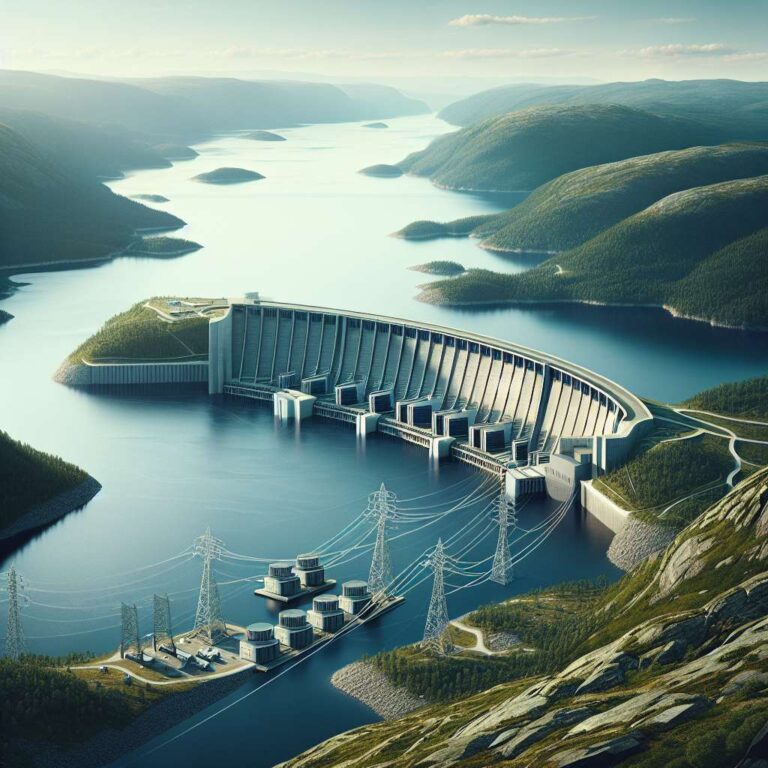
OpenAI´s Stargate Norway is a high‑scale compute project positioned to expand sovereign infrastructure for Artificial Intelligence in Europe. The facility, sited near Kvandal outside narvik in northern Norway, is being developed with strategic backing from nscale global holdings, aker and OpenAI. Initial plans call for 230mw of data centre capacity in phase one, with a planned expansion of an additional 290mw, and the installation of 100,000 nvidia gpus by the end of 2026.

The project is framed as part of OpenAI´s ´OpenAI for Countries´ programme, intended to provide localised compute for researchers, startups and enterprises across the uk, the nordics and northern europe. Technical choices favour efficiency: closed‑loop, direct‑to‑chip liquid cooling aims to cut energy waste; the centre will run on fully renewable power, tapping abundant local hydropower; and waste heat will be reused to support low‑carbon industry in the region. These elements are central to the pitch that the site can combine high performance with a lower carbon footprint.

Operational control and delivery will be led by nscale, with the development executed by nscale and operated through a joint venture with aker, including subsidiary companies following aker´s merger with aker horizons. Josh Payne, ceo of nscale, framed Stargate Norway as ´one of the first european ai gigafactory to market´, highlighting jobs, long‑term regional activity and industrial resilience as intended outcomes. Øyvind Eriksen, president & ceo of aker, positioned the project as a continuation of norway´s strategy of converting clean energy into industrial value.

OpenAI´s ceo, Sam Altman, emphasised the continent‑wide need for more compute and described Stargate Norway as infrastructure that will ´help provide the compute power to drive the next wave of Artificial Intelligence breakthroughs and economic progress for Europe, in Europe.´ The facility is also being positioned to give priority access to local researchers and start‑ups, and to align with national and regional digital strategies while offering surplus capacity to commercial clients across the region.
70

Impact Score

How Artificial Intelligence is reshaping financial services oversight

Financial services regulators are largely treating Artificial Intelligence as another technology governed by existing rules rather than building new securities-specific frameworks. History suggests that clearer expectations will emerge through examinations, enforcement, and supervisory guidance.

Nvidia faces gamer backlash over Artificial Intelligence shift

Nvidia is facing growing frustration from gamers as memory supply is steered toward data center chips and DLSS 5 becomes more central to game performance. The dispute highlights how far the company’s priorities have shifted toward enterprise Artificial Intelligence.

Executives see limited Artificial Intelligence productivity gains so far

Corporate enthusiasm around Artificial Intelligence has yet to translate into broad gains in employment or productivity, reviving comparisons to the long lag between early computing breakthroughs and measurable economic impact. Recent surveys and studies show mixed results, with strong expectations for future benefits but little consensus on present gains.

Nvidia skips a new GeForce generation as Artificial Intelligence chips dominate

Nvidia is set to go a year without a new GeForce GPU generation for the first time since the 1990s as memory shortages and higher margins in Artificial Intelligence hardware reshape the market. AMD and Intel are also struggling to capitalize because the same supply constraints are hitting gaming products across the industry.

Where gpu debt starts to break

Stress in gpu-backed infrastructure financing is emerging around deals that lack the structural protections seen in the strongest transactions. Oracle, the Abilene Stargate project, and older CoreWeave debt illustrate different ways residual risk can surface when contracts, collateral, and counterparties fall short.

Contact Us

Got questions? Use the form to contact us.

Contact Form

Clicking next sends a verification code to your email. After verifying, you can enter your message.