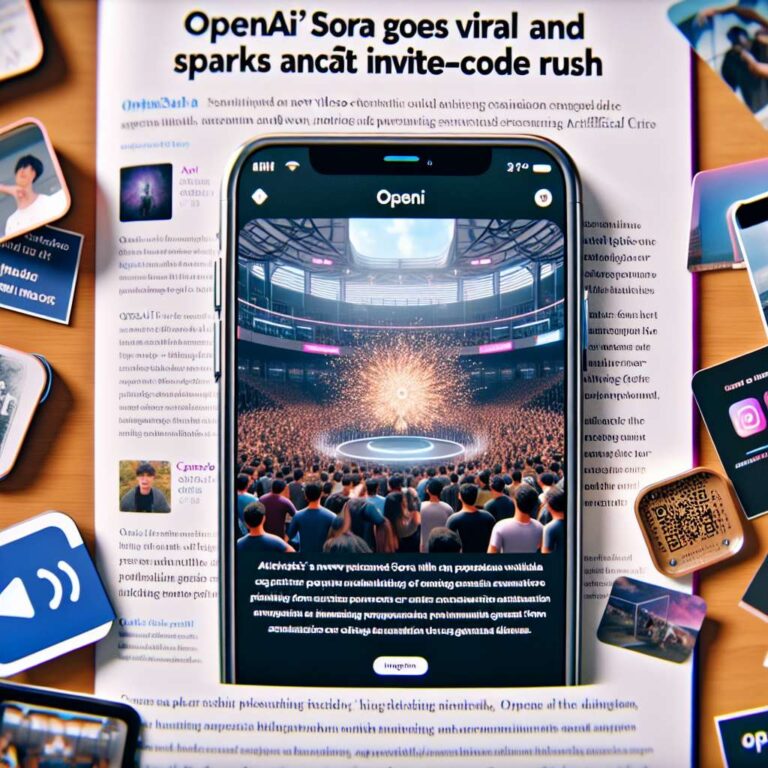
OpenAI’s Sora has rapidly emerged as a breakout hit, topping the U.S. App Store just days after launch and igniting interest among creators and tech enthusiasts. The free app is currently invite-only and limited to iOS users in the U.S. and Canada. Built on the Sora 2 model, it produces high-definition, photorealistic clips with synchronized audio and physics-aware motion. Users can generate videos from text prompts or animate existing images, positioning Sora as a fast, accessible tool for visual storytelling powered by Artificial Intelligence.
Sora’s feature set blends generative creation with social interactivity. A Cameo option lets users insert themselves into scenes after identity verification, a safeguard meant to promote authenticity and prevent misuse of likenesses. A Remix function enables collaborative editing, allowing creators to rework others’ clips by adjusting prompts or visuals. The in-app feed prioritizes videos from friends and followed creators, incorporates age-appropriate controls, and is designed to discourage endless scrolling. Together, these choices emphasize active creation over passive consumption and support a community-driven approach to content.
The app’s fast rise has brought early concerns about copyright, as some users generate videos featuring popular characters and trademarks. According to the piece, OpenAI says it is working to manage these issues responsibly by giving users control over how their likeness and content are used. Even so, Sora’s debut signals a broader shift in how Artificial Intelligence and social platforms may converge, making sophisticated video production available to a wider audience with minimal technical overhead.
Access remains gated. Prospective users must download Sora from the App Store, sign in with an existing OpenAI or ChatGPT account, and enter a valid invite code during onboarding. The article points to OpenAI’s official Discord, social media channels, and community sharing as the most reliable paths to codes, while noting that supply is limited and patience is often required. It also mentions that using a VPN can help meet regional restrictions, and cautions users to avoid untrustworthy, unofficial sources when seeking codes.
Once inside, creators can quickly prototype ideas, bring still images to life, and iterate through Remix to personalize results. The app enforces safeguards that prohibit harmful, violent, or explicit content, and it remains limited to iOS in the U.S. and Canada for now. As access and platform support expand, Sora offers an early view of how Artificial Intelligence could streamline video creation and reshape social sharing through more collaborative and personalized formats.