
NVIDIA and SK Group build Artificial Intelligence factory to drive Korea’s manufacturing and digital transformation

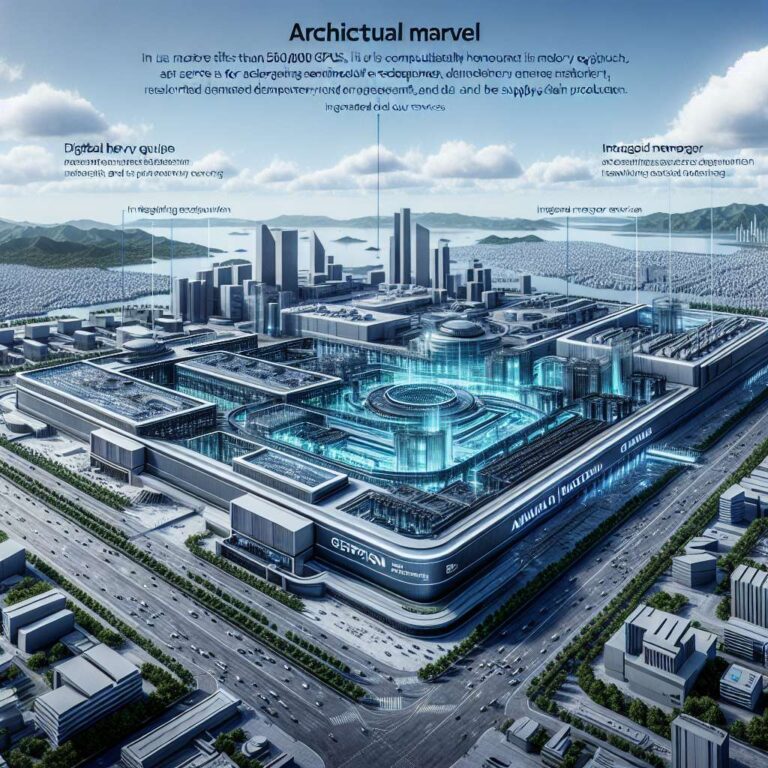
NVIDIA and SK Group are building an Artificial Intelligence factory in Korea that will include more than 50,000 NVIDIA GPUs, with a first phase due by late 2027. The facility will support SK subsidiaries and external organizations through a GPU-as-a-service model.

NVIDIA announced a partnership with SK Group to build an Artificial Intelligence factory in Korea aimed at advancing semiconductor research, development and production. SK Group plans a facility featuring more than 50,000 NVIDIA GPUs, with the first phase scheduled for completion by late 2027. Once fully deployed, the project is expected to rank among Korea’s largest Artificial Intelligence factories.

The new factory will provide cloud infrastructure to support digital twin and Artificial Intelligence agent development and will serve SK subsidiaries, including SK hynix and SK Telecom (SKT). In addition to internal use, the site will offer access to external organizations through a GPU-as-a-service model, a structure intended to accelerate digital transformation and industrial innovation across Korean industries.

As part of the expanded collaboration, NVIDIA and SK Group will work together on SK hynix high-bandwidth memory (HBM) and next-generation advanced memory solutions for NVIDIA GPUs. The partnership also covers cooperation in semiconductor manufacturing and telecommunications infrastructure. The combined effort links GPU capacity, memory development and cloud services to create an integrated platform for research, production and commercial access.
68

Impact Score

Tesla plans terafab for Artificial Intelligence chips

Tesla is moving toward a large-scale chip manufacturing project to support its autonomous driving roadmap. Elon Musk said the terafab effort for Artificial Intelligence chips will launch in seven days and may involve Intel, TSMC and Samsung.

Timeline traces evolution, civilisation and planetary stewardship

A sweeping chronology links cosmology, evolution, human history and modern environmental risk in a single long view of the human condition. The sequence culminates in contemporary debates over climate change, biodiversity loss and artificial intelligence governance.

Wolters Kluwer report tracks Artificial Intelligence shift in legal work

Wolters Kluwer’s 2026 Future Ready Lawyer findings show Artificial Intelligence has become a foundational tool across law firms and corporate legal departments. The survey points to measurable time savings, revenue growth, and rising pressure to strengthen training, ethics, and security.

Anthropic March 2026 release roundup

Anthropic rolled out a broad set of March 2026 updates across Claude Code, the Claude Developer Platform, Claude apps, and enterprise partnerships. Changes focused on larger context windows, workflow improvements, reliability fixes, visual output features, and new partner enablement programs.

China renews push to lead in technology and Artificial Intelligence

China’s 15th five-year plan elevates science and technology as core national priorities, with a strong emphasis on self-reliance and Artificial Intelligence. The blueprint signals heavier investment, broader industrial support, and a more confident bid to shape global technology standards.

Contact Us

Got questions? Use the form to contact us.

Contact Form

Clicking next sends a verification code to your email. After verifying, you can enter your message.