Nvidia´s founder and CEO, Jensen Huang, delivered a sweeping vision for the role of artificial intelligence in Europe during a headline talk in Paris, heralding what he termed a new industrial revolution powered by robotics and virtual training environments. Addressing an audience at a major industry event hosted by Publicis Groupe, Huang argued that the continent stands at the forefront of a transformation into the ´era of AI agents´—autonomous systems driven by large language models capable of learning, reasoning, and executing like humans.
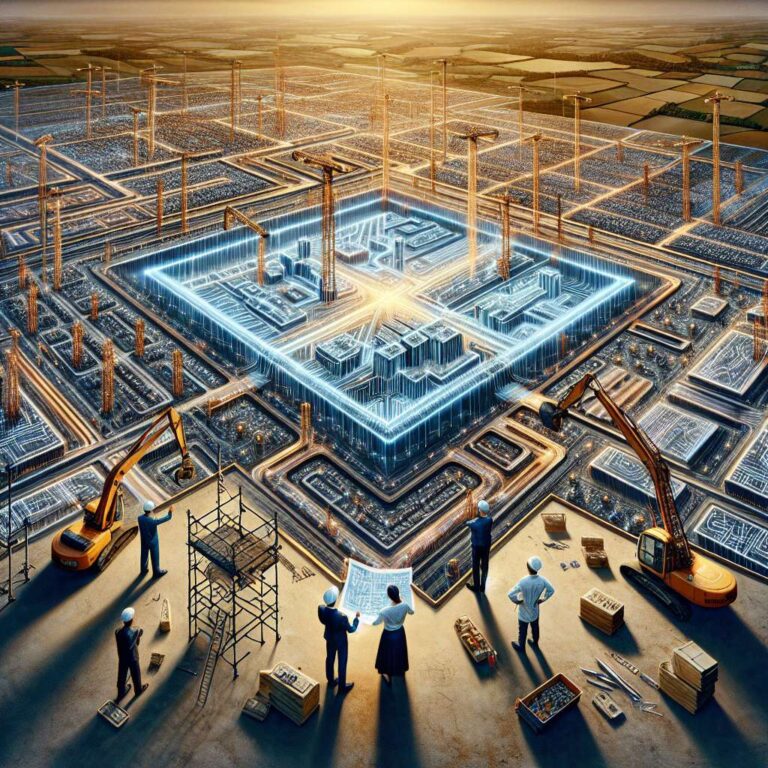
Central to Nvidia’s plan is the construction of the world’s first industrial artificial intelligence cloud, to be hosted in Germany and equipped with 10,000 GPUs. This facility aims to support manufacturers across Europe, from product design and engineering to advanced robotics and streamlined logistics. Notable partners in this endeavor include Siemens, Mercedes-Benz, BMW, and Toyota. Huang also revealed intentions to launch or expand advanced artificial intelligence research and development centers in seven European nations: France, Sweden, Italy, Spain, the United Kingdom, Germany, and Finland. He forecast that these efforts will expand Europe´s artificial intelligence capacity tenfold in just two years, describing ´AI factories´ as crucial to future infrastructure and economic growth.
France is set to play a key role in the expansion, with President Emmanuel Macron announcing a partnership involving Nvidia and French startup Mistral AI to develop the Mistral Compute data center, situated near Paris. The facility is projected to start with a 40-megawatt data center—scalable to 100 megawatts—housing about 18,000 of Nvidia´s latest, top-tier superchips. Mistral AI, founded only two years ago, aims to raise significant funding to transition from model development to providing high-performance computing resources via in-country servers. This collaboration aligns with France 2030, a national investment program committing €54 billion through decade’s end for digital and green technologies. Macron emphasized the importance of digital sovereignty and reducing dependence on non-European platforms, highlighting Europe´s drive for strategic autonomy. The event also showcased breakthroughs like Nvidia’s robot Grek and reinforced the continent’s ambitions to define its own path in artificial intelligence innovation and infrastructure.