
Nvidia reportedly pauses rtx 50 series supply for 6 months amid artificial intelligence demand

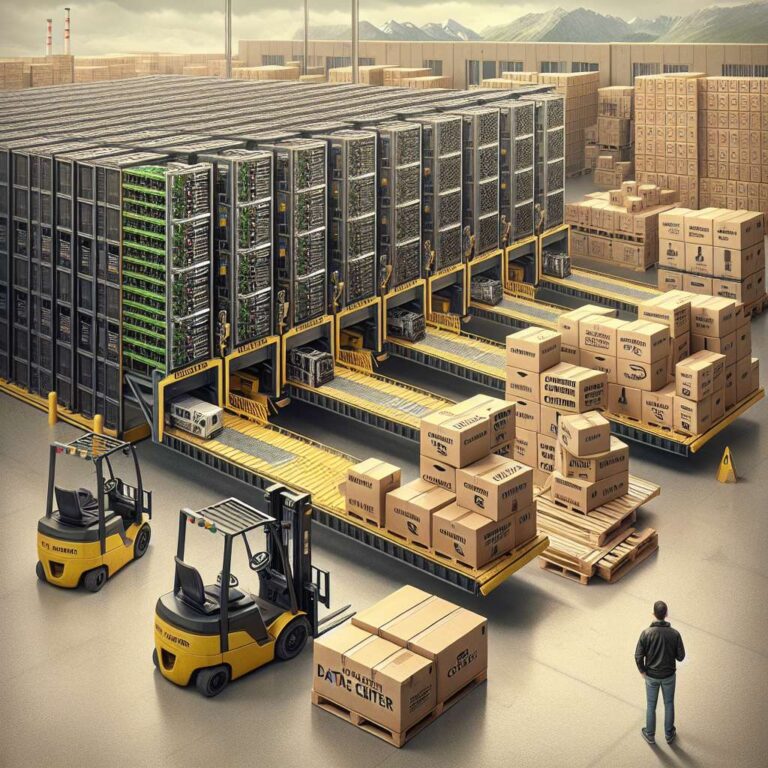
Nvidia is reportedly curbing GeForce RTX 50 series production for up to six months as artificial intelligence chips consume limited silicon and memory supply, with knock-on effects for mainstream gaming GPUs. Leaker Moore's Law Is Dead claims the company has overbooked artificial intelligence sales and is prioritizing datacenter orders over consumer cards.

The article reports that intense demand from the artificial intelligence industry for advanced silicon is constraining supply for the DIY PC and gaming markets, exacerbated by memory shortages that have already led to reports of the RTX 5060 Ti and 5070 Ti being effectively canceled, as well as suggestions that the upcoming gaming console generation could be delayed until the market stabilizes. According to leaker Moore’s Law Is Dead, Nvidia is now planning to cut production of the GeForce RTX 5060, with the YouTuber citing sources that say the “5060 is done for the next six months,” and that Nvidia has “vastly overbooked AI sales,” and needs to pause almost all RTX 50-series production in order to fulfill those orders. These alleged moves indicate a broader strategic shift toward data center and artificial intelligence customers at the expense of near-term gaming GPU availability.

Earlier rumors about production cuts for the RTX 5060 Ti and 5070 Ti suggested that only the 16 GB versions would be heavily constrained, while 8 GB models would stay on shelves throughout 2026, which pointed to a partial, tiered impact on the product stack. The new claims described in the article indicate that the 8 GB variants are now also being affected, signaling a deeper supply squeeze than initially anticipated and suggesting that more mainstream configurations will be harder to find. Nvidia’s lower tier RTX 5050, which is said to rely on older GDDR6 VRAM that is not under the same level of supply pressure, is expected to be less affected and could remain a relatively more accessible option for budget buyers seeking current generation hardware.

Even with these constraints, the piece notes that graphics cards with 8 GB will not disappear entirely but that their supply will “trickle in” at low volume, implying sporadic availability and likely regional discrepancies for consumers trying to upgrade. One source cited in the report says gamers may see some relief in Q4, 2026, hinting that broader normalization of inventories could still take years as artificial intelligence demand competes with gaming for capacity. At the same time, a source claims that Nvidia is planning a roughly 30% price increase across the board, with BOM kits seeing a price increase, which could further reshape the market by pushing effective street prices higher even as the supply situation slowly improves.
55

Impact Score

Indiana launches Artificial Intelligence business portal

Indiana is rolling out IN AI, a statewide portal meant to help employers adopt Artificial Intelligence with practical guidance, workshops and peer support. State leaders and business groups are positioning the effort as a way to raise productivity, wages and job growth while keeping workers at the center.

Goodfire launches model debugging tool for large language models

Goodfire has introduced Silico, a mechanistic interpretability platform designed to let developers inspect and adjust model behavior during development. The company is positioning it as a way to give smaller teams deeper control over open-source models and more trustworthy outputs.

Nvidia launches nemotron 3 nano omni for enterprise agents

Nvidia has introduced Nemotron 3 Nano Omni, a multimodal open model designed to support enterprise agents that reason across vision, speech and language. The launch extends Nvidia’s push beyond hardware into models and services while targeting more efficient agentic workflows.

Intel 18A-P node improves performance and efficiency

Intel plans to present new results for its 18A-P process at the VLSI 2026 Symposium, highlighting gains in performance, power efficiency, and manufacturing predictability. The updated node is positioned as a stronger option for customers seeking 18A density with better operating characteristics.

EA CEO defends broader Artificial Intelligence use in game development

EA CEO Andrew Wilson defended the company’s internal use of Artificial Intelligence after employee claims that the tools were slowing work rather than helping. He framed the technology as an aid for repetitive quality assurance tasks, even as concerns persist over its broader impact on development.

Contact Us

Got questions? Use the form to contact us.

Contact Form

Clicking next sends a verification code to your email. After verifying, you can enter your message.