
Nvidia to Maintain Chinese Market Presence Despite Export Controls

Nvidia reaffirms its commitment to serving the Chinese market, continuing to offer Artificial Intelligence chips such as the H20 GPU despite export restrictions.

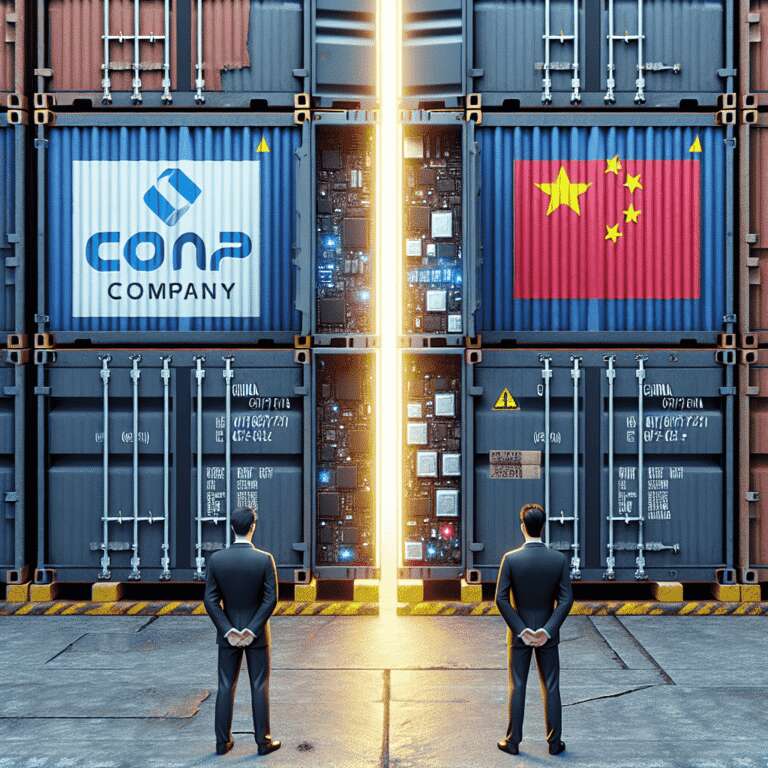
Nvidia CEO Jensen Huang has reiterated the company´s intent to continue engaging with the Chinese market, even as U.S. export restrictions limit access to its most advanced Artificial Intelligence chips. In recent statements, Huang confirmed that Nvidia will keep producing and delivering products for Chinese clients, including the H20 GPU designed specifically to comply with international trade regulations.

The H20 GPU, while capable of running Artificial Intelligence models, is not Nvidia´s top-performing chip— a title held by the A100. Restrictions imposed by the U.S. government have barred Nvidia from supplying its highest-end Artificial Intelligence hardware to China, compelling the company to develop alternative products that meet regulatory standards yet still address ongoing demand from Chinese technology firms.

Despite these constraints, Nvidia remains an influential player in the global Artificial Intelligence semiconductor industry, and its continuous presence in China underscores both the significance of the market and the complexities of international technology trade. Nvidia´s commitment to serving Chinese customers with permissible products also reflects the broader industry challenge of balancing innovation and business growth with evolving geopolitical and regulatory pressures.
57

Impact Score

EU delays key Artificial Intelligence Act deadlines

The European Union has provisionally agreed to revise the Artificial Intelligence Act, delaying several major compliance deadlines and narrowing some obligations. The changes give businesses more time to prepare while preserving the law’s overall high-risk framework.

Empirical Research Assistance automates scientific coding

Empirical Research Assistance, a system developed by researchers at Google and Harvard, automatically writes and refines scientific software for scorable research tasks. Tests showed it could outperform expert-built programs across problems including COVID-19 forecasting, neural modeling, and single-cell RNA sequencing analysis.

Google unveils new Artificial Intelligence models and personal agents

Google used its I/O developer conference to introduce updated Gemini models and personal Artificial Intelligence agents aimed at competing more aggressively with OpenAI and Anthropic. The push centers on stronger models, wider product integration, and a broader enterprise and developer pitch.

Policymakers weigh pause on Artificial Intelligence data center construction

Federal, state, and local officials are moving to slow or condition large data center development as concerns grow over electricity costs, grid strain, environmental effects, and labor standards. Proposed moratoriums and tax incentive changes are creating new uncertainty for developers, hyperscalers, and financiers.

Contact Us

Got questions? Use the form to contact us.

Contact Form

Clicking next sends a verification code to your email. After verifying, you can enter your message.