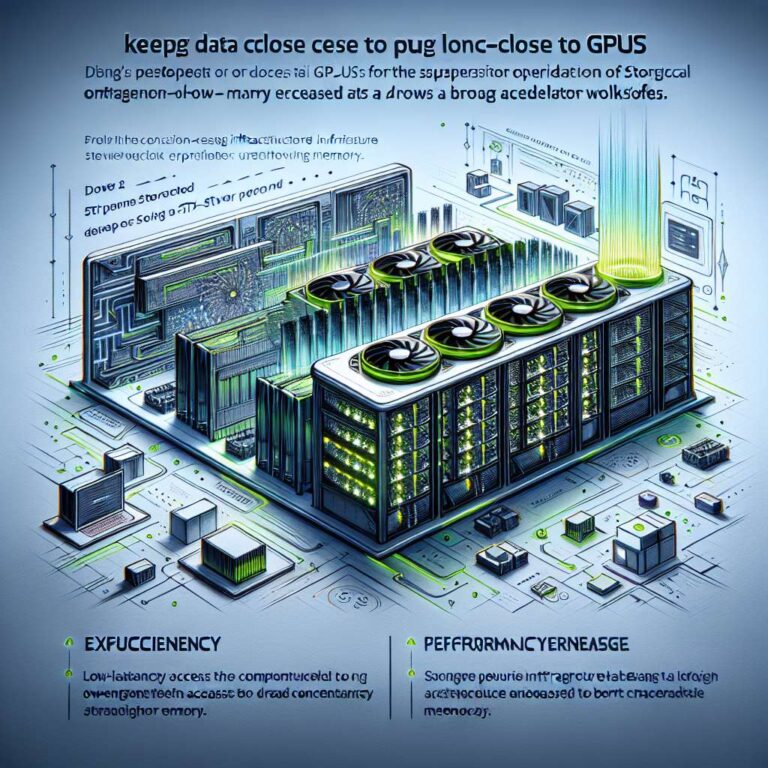
NVIDIA introduced BlueField-4 STX, a modular reference architecture designed to help enterprises, cloud providers and Artificial Intelligence providers deploy accelerated storage infrastructure for long-context reasoning in agentic Artificial Intelligence. The architecture targets environments where Artificial Intelligence agents operate across many steps, tools and sessions and require fast access to data and contextual working memory.
Traditional data centers provide high-capacity, general-purpose storage, but they lack the responsiveness needed for seamless interaction with agentic Artificial Intelligence systems. As context grows, traditional storage and data paths can slow Artificial Intelligence inference and reduce GPU utilization. BlueField-4 STX is positioned to address that limitation by enabling storage providers to build infrastructure that keeps data close and accessible at scale.
NVIDIA says the architecture is intended to support higher throughput and responsiveness across inference, training and analytics in agentic Artificial Intelligence factories. The first rack-scale implementation includes the NVIDIA CMX context memory storage platform, which expands GPU memory with a high-performance context layer for scalable inference and agentic systems, providing up to 5x tokens per second compared with traditional storage.