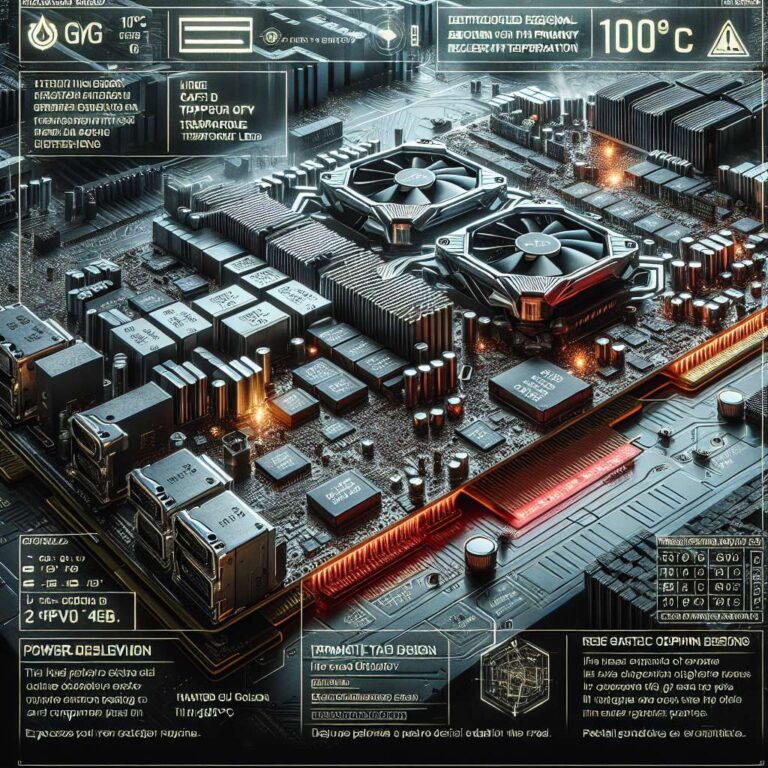
Recent thermal testing by Igor´s Lab has uncovered significant hotspots on the PCBs of NVIDIA´s GeForce RTX 50-series graphics cards, including models such as the RTX 5080, 5070 Ti, and 5060 Ti. These hotspots—distinct from the previously included ´Hot Spot´ temperature sensor that NVIDIA has removed—are localized areas, particularly at the rear of the PCB, where temperatures during operation were found to spike above 100°C. Despite these high PCB temperatures, the main GPU chip remains cooler, typically below 80°C. The issue appears unrelated to silicon performance and is instead tied to the physical structure and electrical layout within tightly packed clusters of copper layers and via arrays on the board.
Multiple manufacturers, including Palit, PNY, and MSI, have reported similar findings, attributed to their adherence to NVIDIA’s reference PCB layouts and conventional cooler mounting designs. The phenomenon is rooted in the separation between PCB designers and cooling engineers, leading to inefficiencies in heat dissipation in real-world conditions. NVIDIA’s Thermal Design Guide provides specific power-loss budgets and detailed recommendations for optimal thermal management, assuming ideal circumstances such as perfect airflow. However, these conditions rarely exist in consumer environments, causing certain PCB areas—especially those underneath the voltage regulation modules (VRMs)—to become thermal bottlenecks.
The challenge is exacerbated by the use of multi-layer PCBs, which carry high currents through copper layers as thin as 35 to 70 microns, converging in tight spaces under VRMs without sufficient thermal bridges or reinforced vias for effective heat transfer. The typical backplate and heat-pipe cooling arrangements are often unable to remove heat from these critical junctions quickly enough. As a result, while overall card performance and GPU core temperatures remain within safe limits, consumers may experience decreased long-term reliability or limited overclocking headroom due to these persistent PCB hotspots. The findings highlight the importance of integrated design approaches for future high-performance graphics cards, merging PCB and thermal solutions from inception.