
NVIDIA DLSS 4 expands to Forza Horizon 6, Screamer and Subliminal

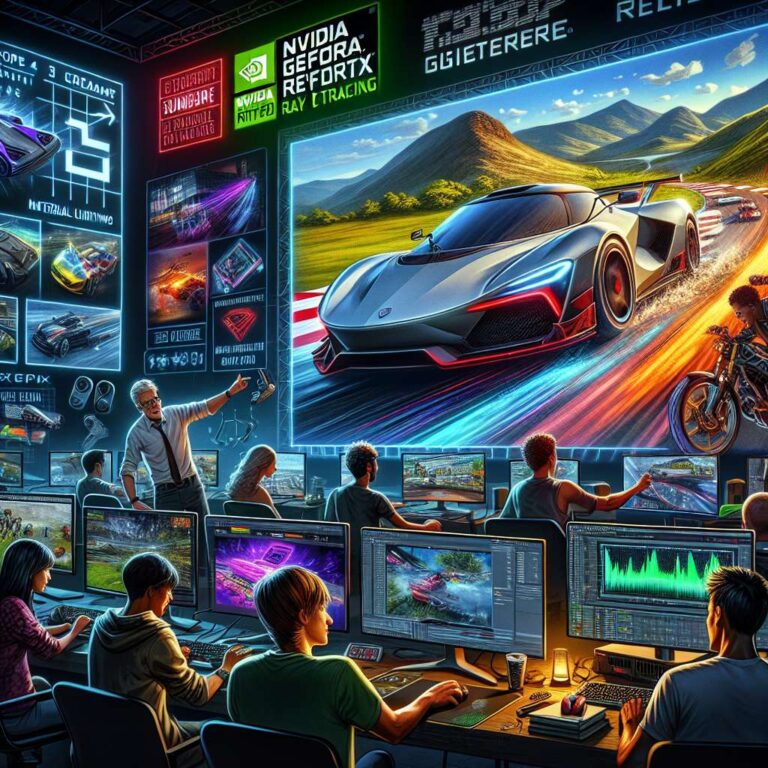
NVIDIA highlighted a new wave of games adopting DLSS 4, NVIDIA Reflex, and ray-traced features for GeForce RTX players. Forza Horizon 6, Screamer, and Subliminal are the latest titles named, alongside the debut of NVIDIA DLSS 5.

NVIDIA outlined another round of game announcements centered on DLSS, NVIDIA Reflex, and advanced ray-traced effects for GeForce RTX users. The latest update focuses on a broader push to bring these graphics features into newly released and newly announced titles.

This week, Screamer launches with DLSS 4 with Multi Frame Generation, followed by Subliminal on the 31st. Playground Games has announced that Forza Horizon 6 is launching May 19th with DLSS 4 and ray tracing.

NVIDIA also announced NVIDIA DLSS 5, describing it as an Artificial Intelligence-powered advance in visual fidelity. The company said the technology infuses pixels with photorealistic lighting and materials, aiming to bridge the gap between rendering and reality.

Taken together, the announcements position DLSS 4 as a near-term upgrade arriving across multiple games, while DLSS 5 is presented as the next step in NVIDIA’s image-quality ambitions. The update keeps the focus on expanding the feature set available to GeForce RTX players across both current launches and upcoming releases.
55

Impact Score

Intel launches Xeon 600 workstation processors

Intel has launched its Xeon 600 series Granite Rapids-WS processors for workstations and high-end desktops, with a focus on Artificial Intelligence development, AVX-512, and large PCIe connectivity. The lineup scales up to 86 Redwood Cove performance cores and supports high memory and I/O capacity.

Power-flexible Artificial Intelligence factories tested as grid stabilizers

Power-flexible Artificial Intelligence factories are being tested as responsive grid assets that can cut power use during demand spikes while keeping priority workloads running. Trials in the U.K. suggest the approach could speed grid connections for large computing sites and reduce pressure for costly infrastructure expansion.

Open and proprietary Artificial Intelligence are converging

NVIDIA framed the future of Artificial Intelligence as a mix of open and proprietary models, with orchestration, specialization and collaboration shaping how systems are built. New coalition efforts aim to expand open frontier models while supporting enterprise and research use cases.

Agentic commerce depends on trusted context

Agentic commerce shifts digital systems from recommendation to execution, raising the bar for identity, permissions, and data quality. Organizations need deterministic entity resolution and real-time context to let agents act safely at machine speed.

Contact Us

Got questions? Use the form to contact us.

Contact Form

Clicking next sends a verification code to your email. After verifying, you can enter your message.