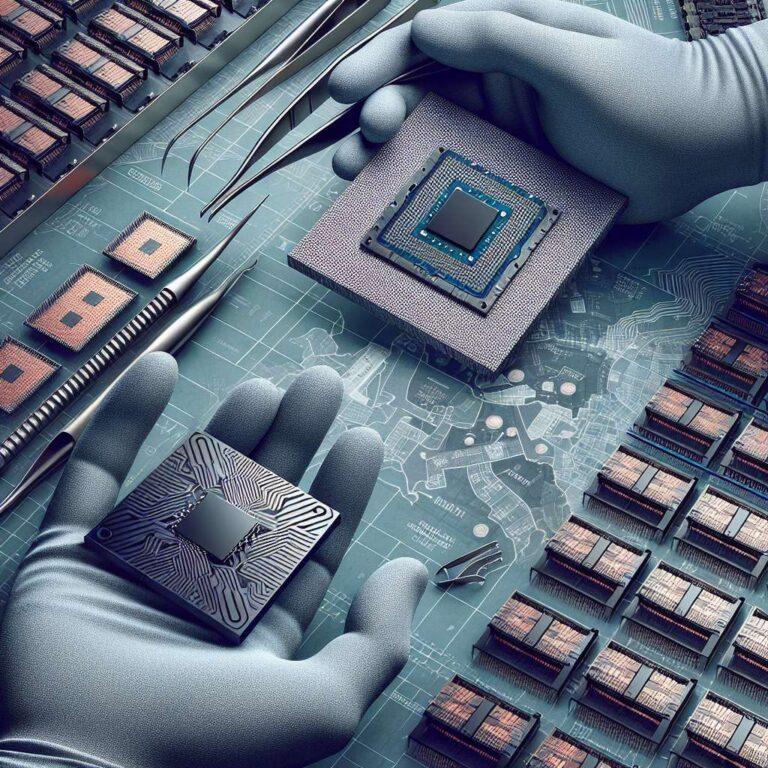
Nvidia’s upcoming ‘Feynman’ artificial intelligence GPU will partially use Intel Foundry nodes, according to a DigiTimes report. Nvidia recently invested a 5% stake in Intel and is exploring access to Intel Foundry manufacturing capacity as part of its strategy for the next generation artificial intelligence accelerator that is scheduled to launch in 2028 as the successor to the current ‘Rubin’ artificial intelligence GPU. The report indicates that Nvidia also intends to tap Intel’s EMIB technology to handle chiplet interconnectivity on the package.
The ‘Feynman’ artificial intelligence GPU will remain primarily based on TSMC manufacturing, with its core IP built on die or dies that leverage the TSMC A16 (1.6 nm) foundry node, which is expected to make up 75% of the chip’s value. The remaining silicon content will be fabricated on Intel 18A or Intel 14A nodes, creating a multi-foundry design that splits different functional blocks across TSMC and Intel processes. The final packaging for the chip is expected to take place on U.S. soil at Intel Foundry, positioning Intel to handle the EMIB chiplet bonding and advanced integration work.
The report suggests that ‘Feynman’ is expected to adopt a newer memory standard, such as HBM4e or even HBM5, and significantly increase memory per package so each chip can handle trillion-parameter scale models. By combining TSMC’s leading edge A16 node with Intel 18A or Intel 14A and Intel’s EMIB packaging, Nvidia appears to be designing ‘Feynman’ to push performance and capacity for very large artificial intelligence workloads while diversifying its manufacturing footprint across multiple foundry partners.