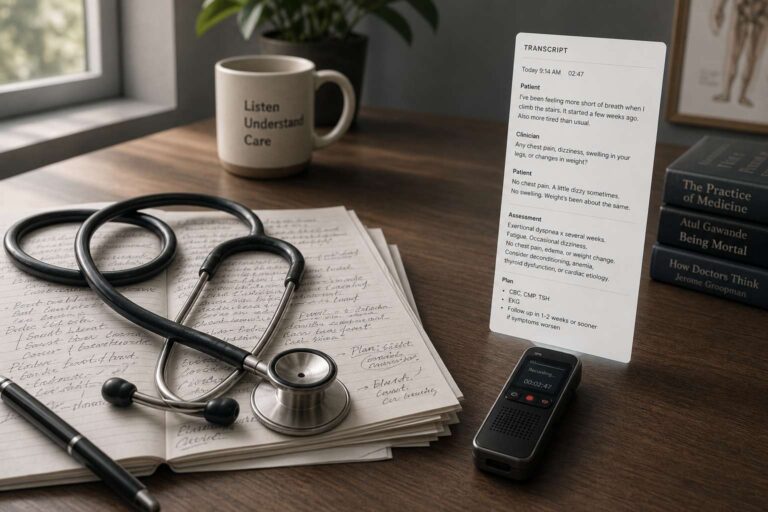
Nvidia is moving deeper into healthcare through a partnership with Abridge, a $5.3bn startup whose Artificial Intelligence app already listens in on doctor-patient conversations and turns them into clinical notes, to build an artificial intelligence model purpose-built for healthcare. Announced June 11, 2026, it is the latest move in an escalating fight among Big Tech’s biggest names for a place inside the exam room. The model is designed specifically for clinical conversations and will live exclusively inside Abridge’s platform, powering tasks such as medical documentation and clinical decision support. It is expected to be ready later this year.
The companies are positioning the system as different from a general medical chatbot. Instead of adapting a broad language model for healthcare after the fact, Nvidia and Abridge plan to train it on the actual back-and-forth of medical visits, including interruptions, jargon, uncertainty and the structure of doctor-patient dialogue. The model is built on Nvidia’s Nemotron family of open Artificial Intelligence models and trained on Blackwell infrastructure using de-identified data, according to Kimberly Powell, Nvidia’s vice president of healthcare.
Nvidia is already an investor in Abridge through its venture arm, NVentures, and Abridge is a significant player in ambient clinical documentation. The startup has raised roughly $800mn to date, including a round that valued it at $5.3bn, and its ambient-listening software is already running across more than 100 health systems, including Kaiser Permanente, Mayo Clinic, Johns Hopkins and Yale New Haven Health. That footprint gives Nvidia a real-world clinical deployment while giving Abridge a custom model backed by the chipmaker’s computing infrastructure.
The partnership arrives as major technology companies and Artificial Intelligence labs compete for healthcare use cases. Microsoft recently announced a collaboration with Mayo Clinic to build a healthcare Artificial Intelligence model trained on the clinic’s data, while OpenAI and Anthropic have launched health products for consumers and providers. The promise is less time spent typing notes and more time spent with patients, but oversight remains unsettled. As of mid-2026, there is still no FDA-cleared generative Artificial Intelligence tool for clinical care, leaving documentation and decision-support systems operating in a gray zone as they expand across hospitals.