Niantic Spatial is transforming the global footprint of Pokémon Go and Ingress into an ultra-detailed visual positioning system designed to ground artificial intelligence agents and robots in the real world. Pokémon Go, launched in 2016 by Google spinout Niantic, was installed by “five hundred million people” in “60 days” and still drew “more than 100 million players in 2024,” providing a vast stream of phone camera images of buildings and urban landmarks tagged with accurate locations. Spun out in May last year as an artificial intelligence company, Niantic Spatial has used this crowdsourced data to build a “world model” that can determine a user’s position on a map “to within a few centimeters,” based on a few images of surrounding structures, and aims to apply it wherever GPS is unreliable.
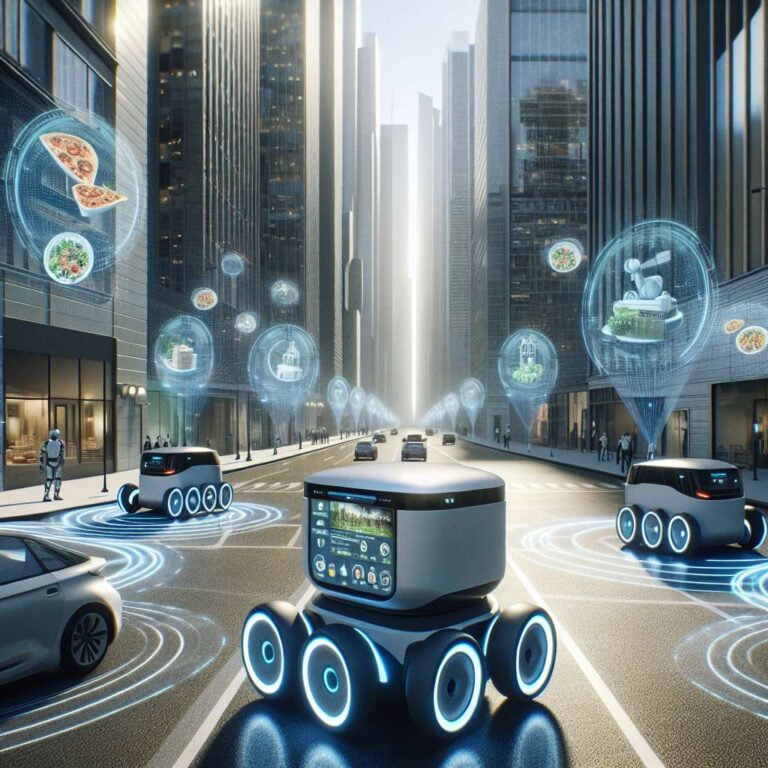
The first major deployment of this technology comes through a partnership with Coco Robotics, which operates around “1,000” sidewalk delivery robots in cities including Los Angeles, Chicago, Jersey City, Miami, and Helsinki. Coco’s flight case size robots are built “to carry up to eight extra-large pizzas or four grocery bags,” and have completed “more than half a million deliveries” over “a few million miles” in varied weather. Operating at “around five miles per hour,” the robots must maintain strict reliability to match human couriers, yet often work in dense “urban canyon” environments where GPS signals can drift “50 meters,” placing that blue dot on the wrong block or side of the street. Fitted with four hip height cameras pointing in all directions, Coco’s robots now fuse Niantic Spatial’s model with GPS so they can recognize what they see and localize with far higher precision, enabling accurate pickup positioning outside restaurants and stopping directly at customer doors instead of several steps away.
Niantic Spatial has trained its model on “30 billion images” from urban settings, heavily concentrated around “a million-plus locations around the world” that served as game hot spots like Pokémon battle arenas. At each of these locations it holds many thousands of images captured from different angles, times of day, and weather conditions, each annotated with metadata about the phone’s exact position, orientation, motion, and direction. This data set supports a model that can infer exact location from visual cues even in areas with thinner coverage than those hot spots, effectively turning the problem of making Pikachu run realistically through streets into the same one as steering Coco’s robots safely along sidewalks. Niantic Spatial’s leaders describe this as the foundation of a “living map,” a hyper-detailed, constantly updated simulation of the real world that will be enriched by robot fleets and other machine agents, evolving maps from simple coordinate systems into guidebook style descriptions where every object is tagged with properties that machines can comprehend, and pushing world models toward a re-creation of the real world rather than synthetic fantasy environments.