Researchers in the computer science department at Durham University have developed new artificial intelligence tools designed to support doctors and nurses working in emergency and acute hospital settings, where rapid decisions under pressure are routine. The tools analyse a patient’s full electronic health record to improve early detection of deteriorating conditions and to strengthen communication when people leave hospital, with the goal of helping staff intervene sooner and potentially save lives. The work is being carried out with partners at the Northern Care Alliance NHS Foundation Trust and the University of Greater Manchester, and is supported by the National Institute for Health and Care Research and the Medical Research Council.
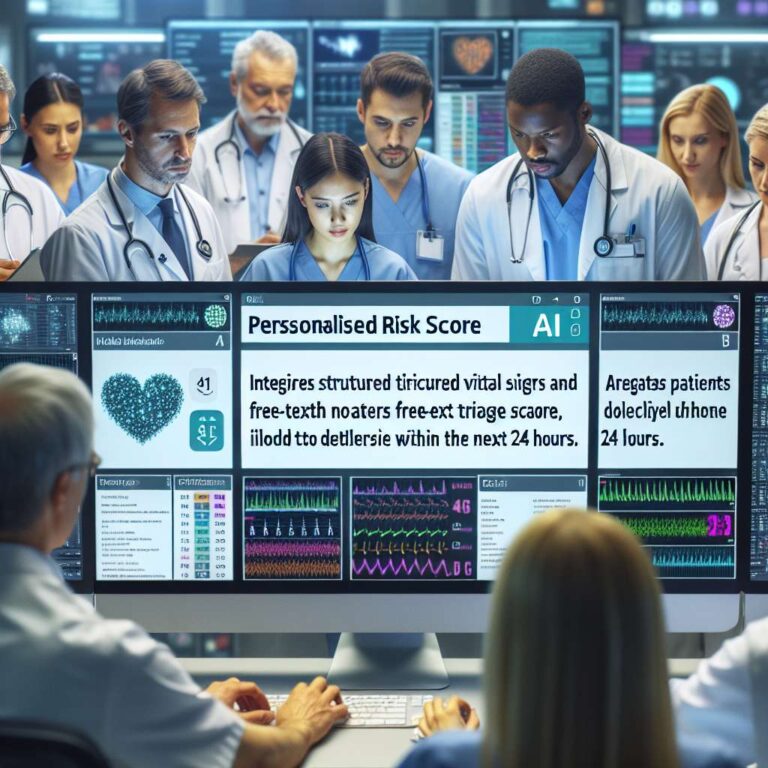
The research focuses on a key safety challenge in hospitals, which is recognising when a patient’s condition is beginning to worsen. Many hospitals currently rely on a system called NEWS2 that is based on paper-style charts and limited data inputs. In contrast, Professor Noura Al Moubayed and Dr Matthew Watson have created an artificial intelligence model that draws on a much richer picture of each patient, including vital signs and the written notes clinicians record when patients arrive at the emergency department. By processing both structured measurements and free-text triage notes, the system generates a more personalised risk score to show which patients are most likely to become critically unwell within the next 24 hours and therefore require urgent attention.
The artificial intelligence model was trained using data from more than 170,000 hospital admissions at Salford Royal Hospital, and it is described as one of the first studies to use written triage notes in this way rather than relying only on numbers and tick boxes. When tested, the artificial intelligence system performed far better than NEWS2. At the same level of false alarms, the artificial intelligence correctly identified 92 percent of patients who later deteriorated, compared with just 13 percent using NEWS2. The results suggest the technology could help clinicians concentrate time and resources on those at greatest risk. The work has already received recognition, winning a Best Presentation Award at the Society for Acute Medicine’s International Conference and being featured in a National Institute for Health and Care Research policy briefing to the Department of Health and Social Care, underlining its potential clinical impact.