
Multi-turn attacks expose weaknesses in open-weight large language models

A Cisco report published 6 November 2025 found open-weight large language models are vulnerable to multi-turn adversarial attacks. The research recorded attack success rates around 90 percent against the tested models.

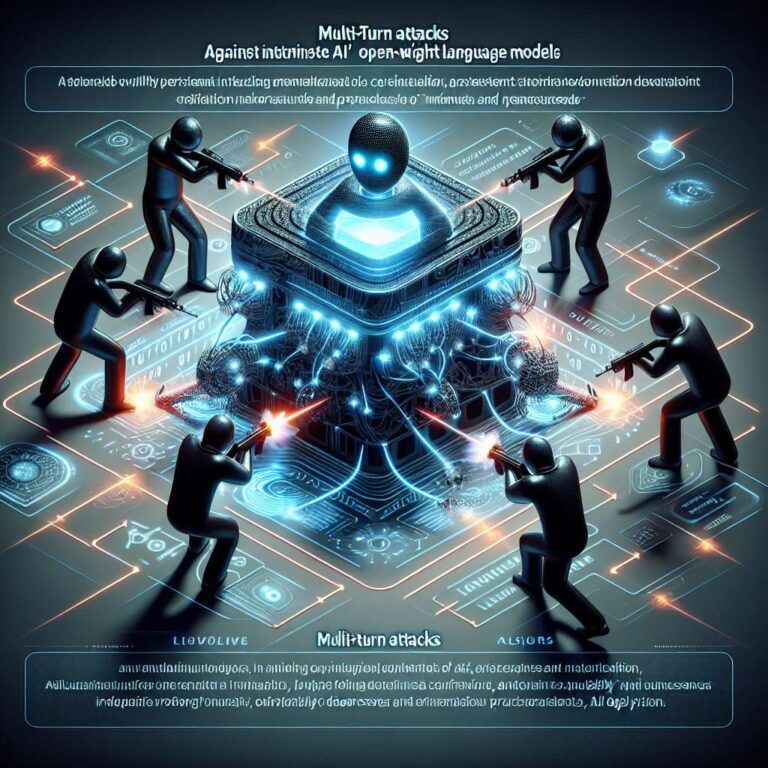
A Cisco report published 6 November 2025 has revealed that open-weight large language models are vulnerable to multi-turn adversarial attacks. According to the report summary listed by Infosecurity Magazine, multi-turn attack sequences against publicly weighted models achieved success rates of about 90 percent, exposing significant weaknesses in those model configurations.

The findings focus on open-weight models, highlighting that adversaries can repeatedly interact with a model across multiple turns to influence outputs in undesired ways. The reported 90 percent success rate underscores a high likelihood that these attack patterns can bypass existing controls when applied to the models tested in the study.

The coverage appears as part of Infosecurity Magazine’s news roundup of security developments on 6 November 2025. The report from Cisco adds to ongoing industry concerns about the robustness of large language models and the need for defenders and developers to reassess protections for open-weight deployments in light of demonstrated multi-turn adversarial effectiveness.
68

Impact Score

AMD unveils Ryzen artificial intelligence Halo developer box at CES 2026

AMD is positioning its new Ryzen artificial intelligence Halo box as a compact desktop and full artificial intelligence development platform aimed at consumer applications, drawing a comparison to NVIDIA’s DGX Spark. The system combines Strix Halo silicon with a custom cooling design and unified memory to attract developers targeting Windows and Linux.

Nandan Nilekani’s next push for India’s digital future

Nandan Nilekani, the architect of India’s Aadhaar system and wider digital public infrastructure, is now focused on stabilizing the country’s power grid and building a global “finternet” to tokenize assets and expand financial access. His legacy is increasingly contested at home even as governments worldwide study India’s digital model.

Contact Us

Got questions? Use the form to contact us.

Contact Form

Clicking next sends a verification code to your email. After verifying, you can enter your message.