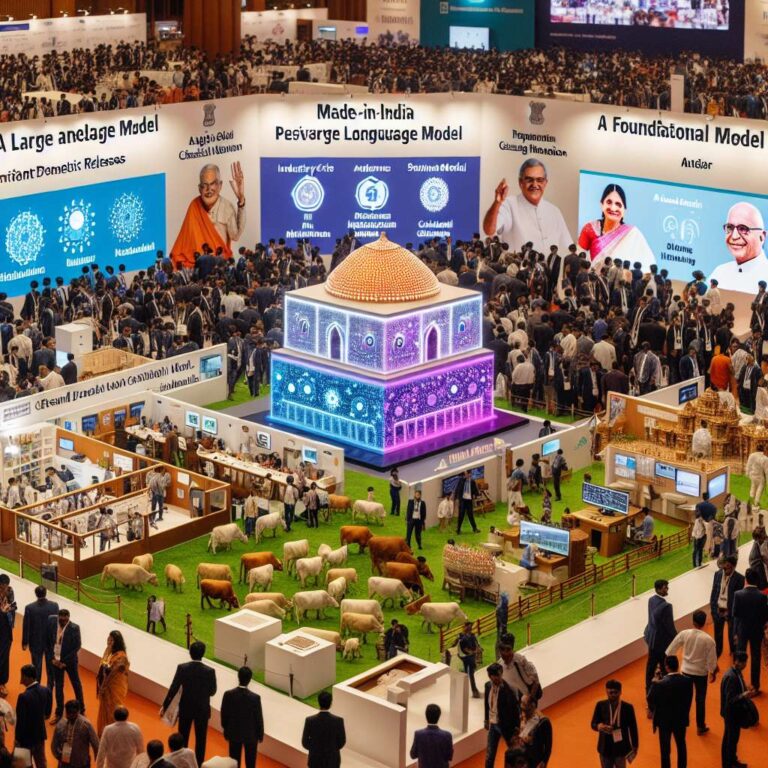
Prime minister Narendra Modi used the 131st episode of his weekly radio programme Mann Ki Baat to argue that the world saw India’s capabilities in the field of Artificial Intelligence at the India Impact Global Artificial Intelligence Summit, held at Bharat Mandapam in New Delhi. Modi said that during this period, India also launched three Made in India Artificial Intelligence models and that the summit brought together leaders from multiple countries, industry experts, innovators, and start-up representatives. He described the gathering as a turning point in how the world will use the power of Artificial Intelligence in the future and noted that it offered him the opportunity to meet world leaders and chief executives of leading technology companies.
Modi highlighted two specific innovations from the summit’s exhibition that drew strong reactions from visiting delegations. At the Amul booth, demonstrations showed how Artificial Intelligence applications are being used in livestock management, including tools that assist in treating animals and 24/7 Artificial Intelligence powered systems that help farmers keep track of dairy operations and monitor livestock. A second showcase focused on preserving India’s cultural heritage, using Artificial Intelligence to safeguard ancient scriptures, traditional wisdom, and manuscripts and adapt them for younger generations. Modi pointed to the Sushruta Samhita display, where the image quality of manuscripts was enhanced with technology and converted into machine readable text, followed by the creation of an Artificial Intelligence avatar that translated the content into Indian and foreign languages, which he said drew great interest from world leaders keen to explore Bharat’s ancient knowledge.
The prime minister linked these demonstrations to a broader narrative of India’s technological progress and cultural depth, underscoring that the three models launched at the summit include Sarvam Artificial Intelligence’s large language models, Gnani.ai’s Vachana text to speech model, and BharatGen’s Param2 17B multilingual foundational model. The Artificial Intelligence Impact Summit 2026, held in New Delhi on February 16-20, concluded with the adoption of the New Delhi Declaration on Artificial Intelligence Impact, marking what participants described as a significant milestone in global cooperation on Artificial Intelligence. The declaration has been endorsed by 88 countries and international organisations, and guided by the principle of “Sarvajan Hitaya, Sarvajan Sukhaya” (Welfare for all, Happiness for all), it insists that the benefits of Artificial Intelligence must be shared equitably across humanity. The summit outcome called for enhanced international cooperation and multistakeholder engagement while respecting national sovereignty, and stressed the need for accessible and trustworthy frameworks and shared understanding of how Artificial Intelligence can serve humanity.