
Microsoft confirms sharing BitLocker recovery keys with FBI

Microsoft has acknowledged that it handed BitLocker recovery keys to the FBI for three laptops and confirmed that device keys can also be stored in its cloud, raising fresh questions over encryption and user privacy.

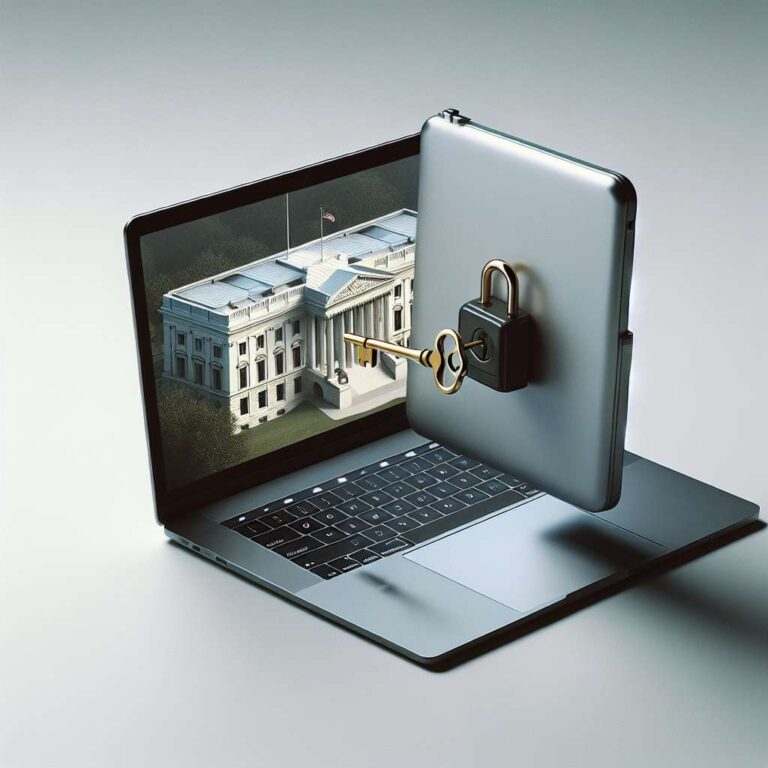
Microsoft has confirmed that the company complied with a request from the United States Federal Bureau of Investigation to provide BitLocker encryption recovery keys for unlocking customer data on three laptops. According to the report, early last year the FBI handed a warrant to Microsoft for recovery keys that were protecting three laptops from the Guam area, which were running Microsoft’s BitLocker encryption on their drives. The article explains that BitLocker uses 128 and 256-bit AES encryption over entire drive volumes, so the data becomes unusable once it is out of the user’s hands and only a generated key can unlock the data with the exact combination, which is described as making it impossible for third parties to see what is inside the storage volume.

The article highlights new details from Microsoft spokesperson Charles Chamberlayne, who confirmed to The Verge that every BitLocker key generated for local device usage is also stored in Microsoft’s online storage server. Chamberlayne stated that customers can choose to store their encryption keys locally, in a location inaccessible to Microsoft, or in Microsoft’s cloud. He added that Microsoft recognizes that some customers prefer Microsoft’s cloud storage so the company can help recover their encryption key if needed and noted that while key recovery offers convenience, it also carries a risk of unwanted access.

The report frames the revelation as a significant security and privacy concern because having these encryption keys stored online introduces what it calls a massive security vulnerability. The article argues that personal privacy can be circumvented in cases where a government body like the FBI requests access to the keys, since Microsoft can retrieve them from its servers. It portrays the situation as an inherent trade off between the convenience of cloud based recovery and the exposure to potential government demands or other unwanted access to encrypted data.
55

Impact Score

OpenClaw pushes autonomous Artificial Intelligence agents into enterprises

OpenClaw’s rapid growth is accelerating interest in persistent, self-hosted autonomous agents that run continuously instead of waiting for prompts. NVIDIA is positioning NemoClaw as a more secure reference implementation for organizations that want local control, auditability and hardened deployment defaults.

Indiana launches Artificial Intelligence business portal

Indiana is rolling out IN AI, a statewide portal meant to help employers adopt Artificial Intelligence with practical guidance, workshops and peer support. State leaders and business groups are positioning the effort as a way to raise productivity, wages and job growth while keeping workers at the center.

Goodfire launches model debugging tool for large language models

Goodfire has introduced Silico, a mechanistic interpretability platform designed to let developers inspect and adjust model behavior during development. The company is positioning it as a way to give smaller teams deeper control over open-source models and more trustworthy outputs.

Nvidia launches nemotron 3 nano omni for enterprise agents

Nvidia has introduced Nemotron 3 Nano Omni, a multimodal open model designed to support enterprise agents that reason across vision, speech and language. The launch extends Nvidia’s push beyond hardware into models and services while targeting more efficient agentic workflows.

Intel 18A-P node improves performance and efficiency

Intel plans to present new results for its 18A-P process at the VLSI 2026 Symposium, highlighting gains in performance, power efficiency, and manufacturing predictability. The updated node is positioned as a stronger option for customers seeking 18A density with better operating characteristics.

Contact Us

Got questions? Use the form to contact us.

Contact Form

Clicking next sends a verification code to your email. After verifying, you can enter your message.