
Microsoft’s artificial intelligence goal is humanist intelligence in service of people and humanity

Mustafa Suleyman, Microsoft's head of Artificial Intelligence, says the company is pursuing Humanist Superintelligence: advanced systems designed to work in service of people and humanity. The plan foregrounds domain-specific, calibrated systems while acknowledging deep uncertainty about how to guarantee safety.

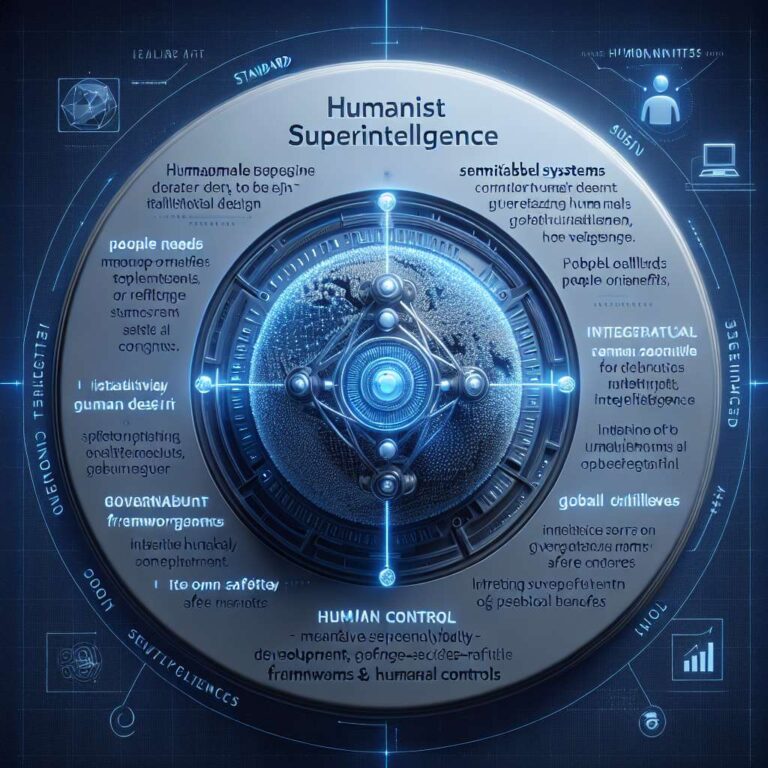
Microsoft’s head of Artificial Intelligence Mustafa Suleyman outlined a directional shift in the company’s research toward what he calls Humanist Superintelligence (HSI). Suleyman describes HSI as “incredibly advanced Artificial Intelligence capabilities that always work for, in service of, people and humanity more generally,” and frames the approach as problem-oriented and domain specific rather than an unbounded, highly autonomous entity. The post emphasizes calibration, contextualization, and limits as defining features of systems Microsoft intends to develop.

To pursue those goals Microsoft has formed a dedicated group called the Microsoft Artificial Intelligence superintelligence team. According to the announcement, the effort will marshal massive resources and combine human intelligence, hardware, software, and other forms of intelligence to build steerable systems. The team intends to prioritize ways that the most advanced forms of Artificial Intelligence can remain under human control while accelerating work on pressing global challenges. The description stresses practical, bounded applications over general autonomy.

The post also highlights a central unresolved problem: how to guarantee the safety of superintelligent systems. Suleyman writes that “no Artificial Intelligence developer, no safety researcher, no policy expert, no person I’ve encountered has a reassuring answer to this question. How do we guarantee it’s safe?” That admission frames safety and control as open technical and policy questions that the team must confront. Microsoft positions its Humanist Superintelligence agenda as an effort to explore those questions while steering development toward systems that serve people and broader societal goals.
52

Impact Score

Who decides how America uses Artificial Intelligence in war

Stanford experts are divided over how the United States should govern Artificial Intelligence in defense, surveillance, and warfare. Their views converge on one point: decisions with such high stakes cannot be left to companies alone.

GPUBreach bypasses IOMMU on GDDR6-based NVIDIA GPUs

Researchers from the University of Toronto describe GPUBreach, a rowhammer attack against GDDR6-based NVIDIA GPUs that can bypass IOMMU protections. The technique enables CPU-side privilege escalation by abusing trusted GPU driver behavior on the host system.

Google Vids opens free video generation to all Google users

Google has made Google Vids available to anyone with a Google account, adding free access to video generation with its latest models. The move expands Google’s end-to-end video workflow and increases pressure on rivals that charge for similar tools.

Court warns against chatbot legal advice in Heppner case

A federal court found that chats with a publicly available generative Artificial Intelligence tool were not protected by attorney-client privilege or the work-product doctrine. The ruling highlights litigation risks when executives or employees use chatbots for legal guidance without lawyer supervision.

Contact Us

Got questions? Use the form to contact us.

Contact Form

Clicking next sends a verification code to your email. After verifying, you can enter your message.