
mice study points to new way to rejuvenate aging immune systems

Researchers at mit and the broad institute used temporary genetic programming in liver cells to restore more youthful t cell responses in aged mice, boosting vaccine and cancer immunotherapy effectiveness. The strategy mimics key thymus signals using mrna-loaded lipid nanoparticles that turn hepatocytes into short-lived protein factories.

Immune function typically weakens with age as the thymus shrinks, reducing the organ’s ability to mature and diversify t cells. As a result, populations of these immune cells become smaller and less capable of reacting quickly to pathogens, leaving older individuals more vulnerable to infections and disease. To counter this decline, a research team at mit and the broad institute has developed an approach that temporarily programs cells in the liver to enhance t cell performance.

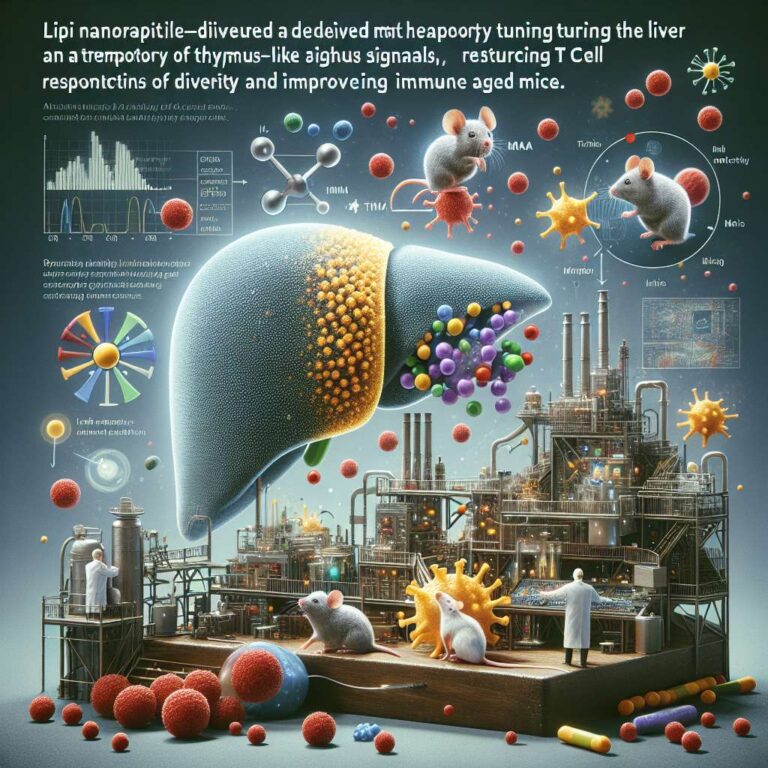
The researchers set out to create a functional stand in for the thymus by turning hepatocytes into a “factory” for t cell stimulating signals. They identified three key factors that usually promote t cell maturation and encoded them into mrna sequences that could be delivered using lipid nanoparticles. When injected into the bloodstream, these nanoparticles accumulate in the liver, where hepatocytes take up the mrna and start manufacturing the proteins encoded by the sequences, effectively supplying the signals that aging thymus tissue no longer provides in sufficient quantities.

In studies with aged mice, the treatment led to much larger and more diverse t cell populations following vaccination, indicating a restored capacity to recognize and respond to new antigens. The treated mice also showed improved responses to cancer immunotherapy, suggesting broader benefits for disease control in older immune systems. The senior researcher on the project, professor feng zhang, expressed hope that if this type of temporary mrna based treatment can be adapted safely for humans, it could help people remain free of disease for a longer span of their lives by revitalizing t cell function without permanently altering organs.
55

Impact Score

EU Artificial Intelligence Act omnibus deal delays high-risk rules

A provisional EU agreement would push back key high-risk Artificial Intelligence Act deadlines while keeping major transparency duties on track for 2 August 2026. The deal also adds a new ban on non-consensual intimate imagery and child sexual abuse material generated by Artificial Intelligence systems.

UK and EU Artificial Intelligence regulatory outlook for May 2026

The UK is moving ahead with targeted Artificial Intelligence measures in policing, online safety, cyber security and copyright policy, while the EU is refining how the EU Artificial Intelligence Act will apply in practice. Consultations, new offences and implementation deadlines are shaping the next phase of compliance on both sides.

Germany sets out national implementation of the Artificial Intelligence Act

Germany has published a draft law to implement the European Artificial Intelligence Act through new supervisory structures, clearer institutional responsibilities, and measures designed to support innovation. The proposal puts the Federal Network Agency at the center of enforcement while preserving sector-specific oversight in sensitive fields.

Contact Us

Got questions? Use the form to contact us.

Contact Form

Clicking next sends a verification code to your email. After verifying, you can enter your message.