
Meta apologises after Kannada auto-translation error declares Karnataka chief minister dead

Meta´s automatic translation tool wrongly declared Karnataka chief minister Siddaramaiah dead, sparking fierce criticism and calls for suspending Kannada translation features until fixed.

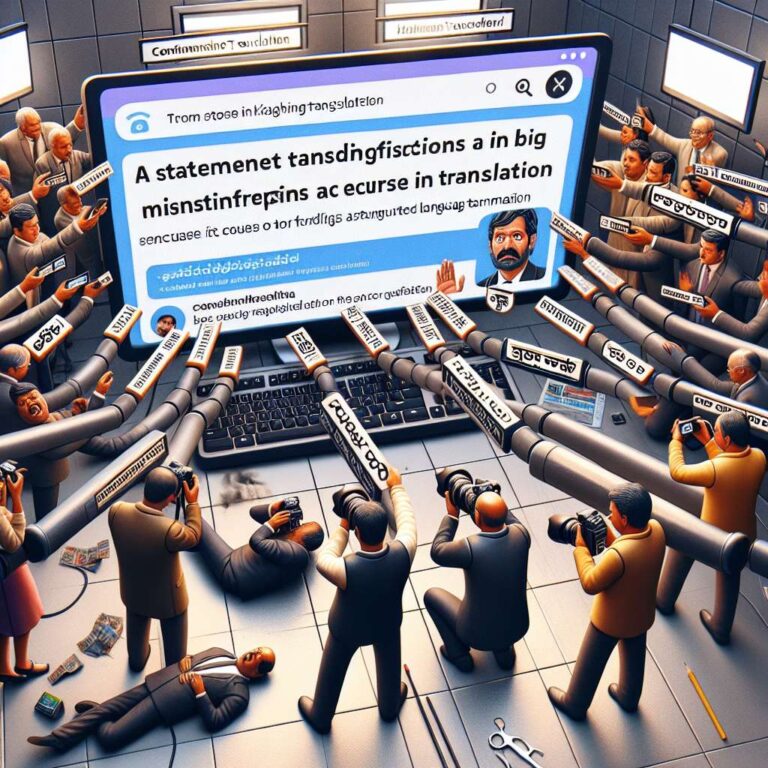
Meta faced intense criticism after its automatic translation tool erroneously declared Karnataka chief minister Siddaramaiah dead while translating a condolence message he posted on Facebook. The blunder occurred when the platform´s Kannada auto-translation feature distorted the original message, leading to widespread misinformation and prompting the chief minister to demand immediate action from Meta.

Reacting promptly, Siddaramaiah called on Meta to suspend the Kannada auto-translation service, highlighting that such inaccuracies pose a risk of misleading users, especially when it pertains to official communication. In response, Meta issued a public apology for the incident and claimed that the translation issue was fixed. The platform acknowledged the seriousness of the matter, stating, ´We fixed an issue that briefly caused this inaccurate Kannada translation. We apologise that this happened.´ Siddaramaiah´s office, through his media advisor, sent a formal communication to Meta requesting immediate corrective measures and greater responsibility in handling regional language translations.

Amid growing scrutiny of big technology platforms, Siddaramaiah also cautioned citizens to remain vigilant regarding the reliability of translations provided by social media services. He warned that errors in auto-translation features could distort facts and potentially compromise public trust, especially during sensitive official matters. The Karnataka government has officially requested a temporary suspension of Kannada auto-translation features until their accuracy is sufficiently enhanced. Currently, Facebook and Instagram users encounter machine translations of content, including public biographical information, reinforcing the urgency for technology firms to address such vulnerabilities and ensure responsible digital communication across languages.
54

Impact Score

EU delays key Artificial Intelligence Act deadlines

The European Union has provisionally agreed to revise the Artificial Intelligence Act, delaying several major compliance deadlines and narrowing some obligations. The changes give businesses more time to prepare while preserving the law’s overall high-risk framework.

Empirical Research Assistance automates scientific coding

Empirical Research Assistance, a system developed by researchers at Google and Harvard, automatically writes and refines scientific software for scorable research tasks. Tests showed it could outperform expert-built programs across problems including COVID-19 forecasting, neural modeling, and single-cell RNA sequencing analysis.

Google unveils new Artificial Intelligence models and personal agents

Google used its I/O developer conference to introduce updated Gemini models and personal Artificial Intelligence agents aimed at competing more aggressively with OpenAI and Anthropic. The push centers on stronger models, wider product integration, and a broader enterprise and developer pitch.

Policymakers weigh pause on Artificial Intelligence data center construction

Federal, state, and local officials are moving to slow or condition large data center development as concerns grow over electricity costs, grid strain, environmental effects, and labor standards. Proposed moratoriums and tax incentive changes are creating new uncertainty for developers, hyperscalers, and financiers.

Contact Us

Got questions? Use the form to contact us.

Contact Form

Clicking next sends a verification code to your email. After verifying, you can enter your message.