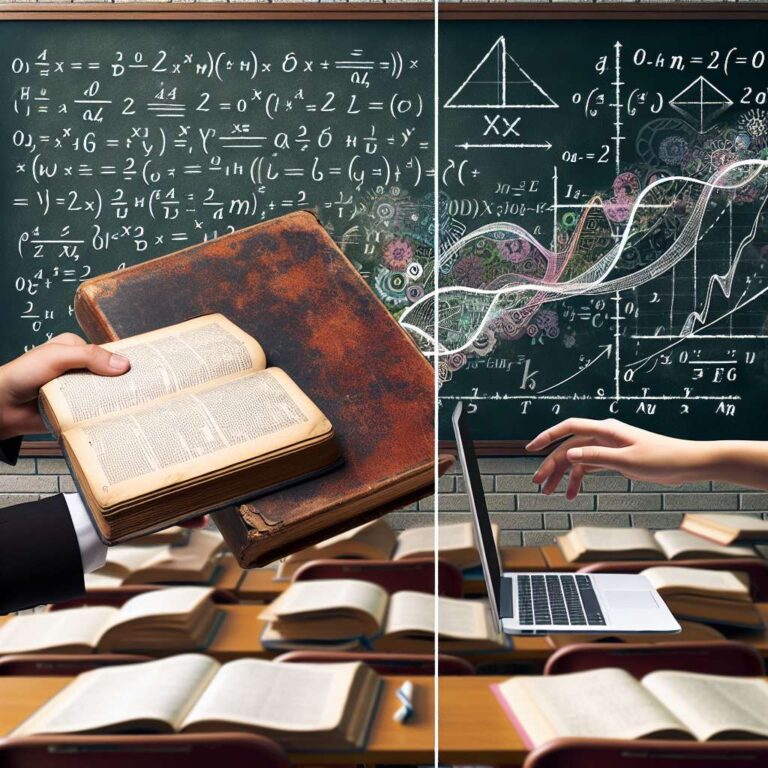
New York Tech president Henry C. ´Hank´ Foley, a seasoned nanotechnology researcher and educator, discusses the significant role Mathematica plays in modern classrooms. As the author of a widely used chemical engineering textbook leveraging Mathematica, Foley emphasizes the software´s power to simplify advanced mathematical modeling across disciplines. He notes that with Mathematica, students and instructors can spend less time on manual calculations and more on analyzing physical systems, applying core principles, and iteratively refining complex models. This shift allows courses in engineering, chemistry, and physics to devote greater classroom attention to conceptual understanding rather than rote mathematics, fundamentally changing the rhythm and depth of STEM education.
Foley advocates a balanced adoption of Mathematica in education. While some critics worry that overreliance on computational tools might undermine essential math skills, Foley argues that knowing the underlying mathematics is crucial for maximizing the benefits of such software. He suggests the right balance varies by educational level and stresses that both undergraduate and graduate students should learn to use Mathematica as a complement to traditional mathematics instruction, not a replacement. Importantly, Mathematica’s accessibility helps lower barriers for students with math anxiety and provides valuable scaffolding. Its Notebook Assistant, equipped with a large language model interface, enables students to pose questions and receive tailored suggestions, fostering confidence without encouraging total dependence on Artificial Intelligence.
Beyond STEM, Foley asserts that a wide range of disciplines can benefit from Mathematica´s technology. Business and social sciences students, for example, gain access to robust statistical tools backed by trusted, highly curated databases within the broader Wolfram ecosystem. When combined with Artificial Intelligence, such platforms empower students—regardless of prior math confidence—to perform sophisticated analyses in subjects as varied as literature, art, and geography. Looking to the future, Foley envisions Artificial Intelligence further revolutionizing education through personalized learning at scale, real-time adaptation to student preferences, and smarter learning assessments. While the integration of human expertise with Artificial Intelligence-powered computational systems continues to evolve, Mathematica stands at the forefront, shaping how educators and students engage with mathematics and data-driven inquiry.