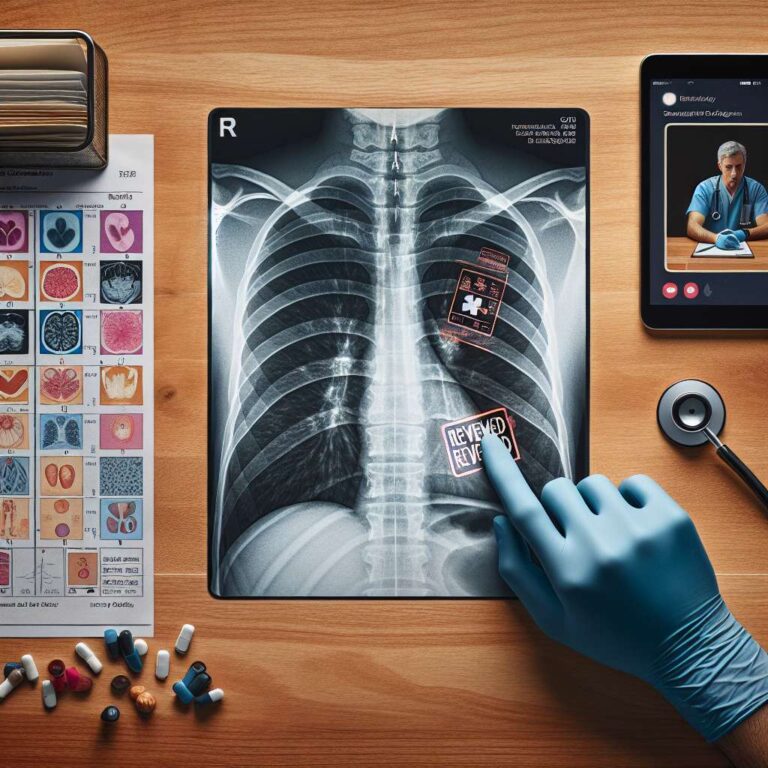
Large language models are being deployed to simplify radiology reports across Mexico and Latin America, making findings easier for patients to understand while supporting clinical workflows. A meta-analysis in The Lancet found that Artificial Intelligence driven simplification can reduce confusion, improve patient engagement, and streamline hospital operations, but also stressed that clinical oversight remains essential. Companies such as Eden are using Artificial Intelligence and tele-diagnosis platforms to improve diagnostic accuracy, optimize operational efficiency, and integrate with local health systems while complying with COFEPRIS regulations and regional data protection rules, addressing workforce shortages and rising patient volumes.
A systematic review in The Lancet reported that OpenAI models dominate this space, with 92% of studies using GPT-based systems and GPT-4 outperforming GPT-3.5, achieving a mean accuracy rating of 4.77 versus 4.09 in sensitivity analysis. Simplified reports targeted reading levels for ages 11-13 and achieved an average score of 3.61 in perceived emotional sensitivity, while clinically significant errors appeared in roughly 0.9% of reports, underscoring the need for clinician validation. Eden combines large language models with imaging-focused Artificial Intelligence, including a thorax model for early lung cancer detection, and reports a 50% reduction in transcription time for radiologists, serving over 15 million patients across 2,200 imaging departments in 18 countries and supporting over 35,000 daily diagnoses and more than 80,000 portal accesses per day.
Adoption of Artificial Intelligence health tools is growing but tempered by trust and accuracy concerns. In Mexico, Artificial Intelligence became the third most consulted source of health information in 2025, up from eighth in 2024, yet only 13% of surveyed respondents agreed that Artificial Intelligence written summaries are usually accurate and 35% raised privacy concerns. One-third of patients in Health Union’s 2025 Connected Health Experiences survey had used tools such as ChatGPT or Google Gemini, with about two-thirds relying on summaries as an orientation aid and fewer than half checking original sources. The global market for Artificial Intelligence in clinical workflow is projected to grow from US$2.78 billion in 2025 to US$11.08 billion by 2030, with Eden’s deployment across 2,400 departments highlighting how integrated platforms can boost productivity if supported by adaptable regulation, local data, and hybrid care models that keep physicians central to patient interaction.
Eden emphasizes training its Artificial Intelligence systems on Latin American radiology data to capture regional anatomical and physiological nuances, and combines this with tele-diagnosis and workflow optimization to improve accuracy and throughput, scaling to 18 countries in four years. At the same time, high profile missteps, such as Google’s removal of Artificial Intelligence generated health summaries after accuracy concerns, and phenomena like “Artificial Intelligence pandering” described by Erick Ponce Flores, show how oversimplified or emotionally tuned responses can mislead patients. The World Economic Forum and Boston Consulting Group highlight that trust in Artificial Intelligence depends on technical literacy, adaptable regulation, and public private collaboration, and in Mexico, COFEPRIS faces modernization and intellectual property challenges that will shape how quickly health systems can leverage these tools. Across Latin America, the emerging consensus favors hybrid models where Artificial Intelligence accelerates comprehension and workflow, while human clinicians safeguard empathy, context, and final decision making.