growing up in south central los angeles, Junior Peña avoided the prevailing gang culture by keeping busy with after-school programs, video games, martial arts, and independent study. driven by curiosity after watching a video about the Higgs boson, he taught himself advanced mathematics and philosophy, which led him to the University of Southern California, the 2019 session of MIT’s summer research program, and later to graduate school at MIT. as a student in the lab of Joseph Formaggio, Peña pursued experimental work on neutrinos, the nearly massless particles that pass through matter with almost no interaction.
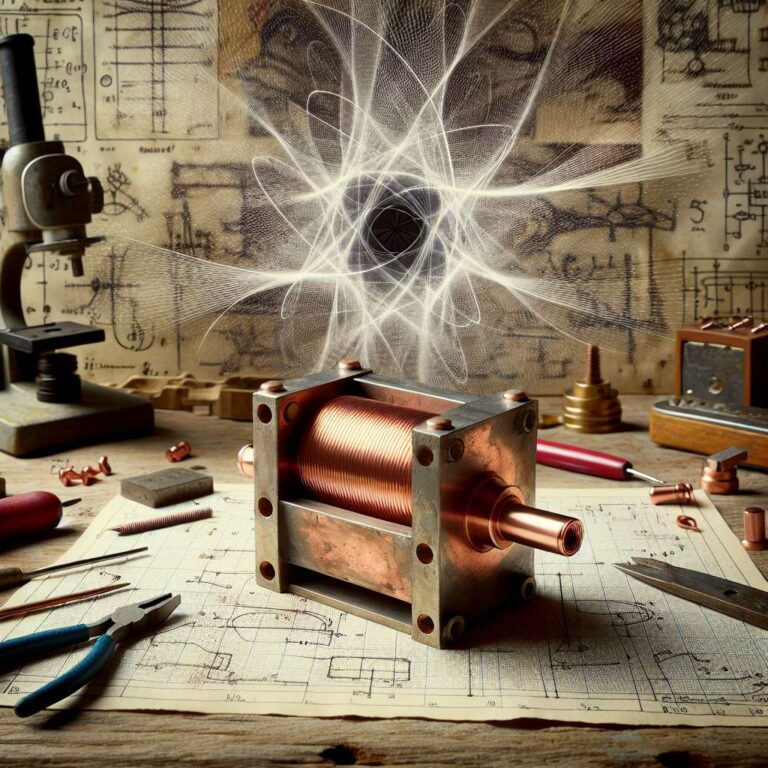
at the Formaggio lab Peña became integral to Project 8, an international collaboration aiming to determine the neutrino’s exact mass. the experiment uses tritium beta decay to emit electrons and antineutrinos, and infers the neutrino’s mass by measuring the tiny amount of missing energy in the electrons’ spectrum. central to that measurement is cyclotron radiation emission spectroscopy, or CRES, a technique that detects faint radio signals from electrons spiraling in a magnetic field. Peña designed and iterated a flashlight-size copper microwave resonator, which he compares to a guitar that amplifies the electrons’ signals. he learned design and simulation software, collaborated with machinists and physicists, and refined the prototype over more than a year.
Peña’s final prototype was sent to the University of Washington in May and installed in July, with calibration planned for the fall. researchers expect to scale up the cavity and the full experimental setup to collect CRES data with tritium in the coming years. collaborators call Peña’s contribution core to the experiment and note that the project will continue to grow through larger facilities. Peña is considering postdoctoral work in areas such as levitated nanosensors and hopes to become a professor to open academic paths for students who did not see themselves represented in science.