
Intel Sells Majority Stake in Altera to Silver Lake, Names New CEO

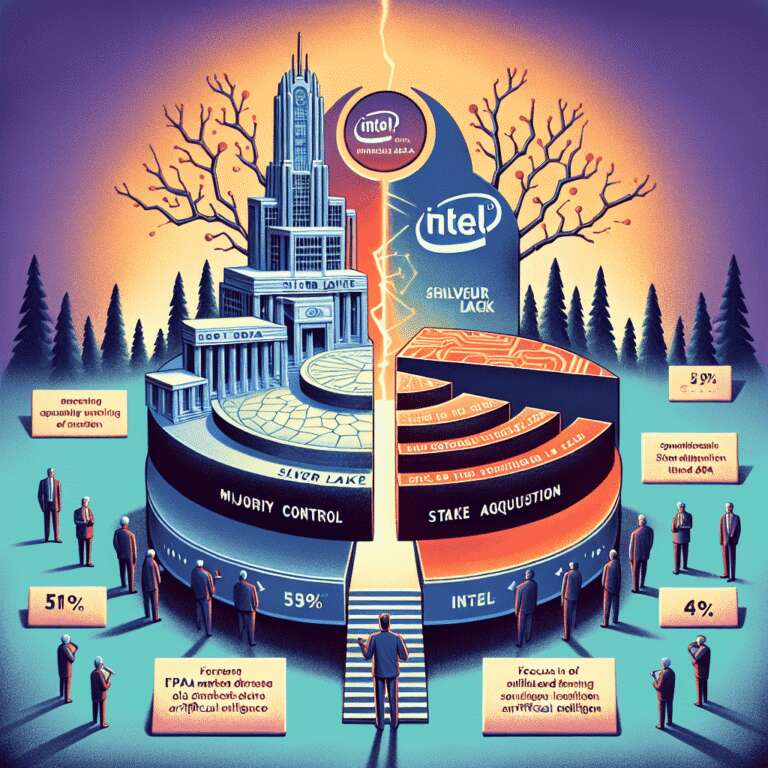
Intel sells 51% of its Altera unit to Silver Lake, making Altera the largest pure-play FPGA firm focused on Artificial Intelligence-driven markets.

Intel Corporation has announced a definitive agreement to sell a controlling 51% stake in its Altera business to Silver Lake, a prominent technology investment firm. This deal values Altera at several billion dollars and marks a significant step toward establishing Altera as an independent company dedicated to delivering advanced FPGA (field programmable gate array) semiconductor solutions. With the acquisition, Altera becomes the largest independent FPGA supplier in the industry, positioning itself to leverage the expanding opportunities presented by the growing adoption of Artificial Intelligence technologies and applications.

Following the transaction, Intel will retain a 49% interest in Altera, ensuring ongoing participation in the subsidiary´s future growth and innovation. The company emphasizes that this arrangement allows Altera to operate with increased autonomy, enabling decisive investments in new technologies while Intel refocuses on its core operations. The partnership structure is intended to unlock value for both companies and their customers by accelerating FPGA advancement, particularly in domains driven by data-centric and Artificial Intelligence workloads.

In conjunction with the investment news, Altera announced a leadership transition: Raghib Hussain will become chief executive officer, effective May 5, 2025. Hussain brings a wealth of experience to the role, having previously served as president of Products and Technologies at Marvell. His background also includes co-founding communications firm Cavium, holding executive positions at leading technology companies such as Cisco and Cadence, and founding the enterprise security startup VPNet. Hussain´s appointment is seen as a move to further cement Altera´s leadership and innovation agenda amid the rapidly evolving semiconductor landscape.
65

Impact Score

Congress weighs Artificial Intelligence transparency rules

Bipartisan lawmakers are pushing a federal transparency standard for the largest Artificial Intelligence models as Congress works on a broader national framework. The proposal aims to increase public trust while avoiding stricter state-by-state requirements and heavier regulation.

Report finds California creative job losses are not driven by Artificial Intelligence

New research from Otis College of Art and Design finds California’s recent creative industry job losses stem from cost pressures and structural shifts, not direct worker displacement by generative Artificial Intelligence. The technology is changing workflows and expectations, but it is largely replacing tasks rather than entire jobs.

U.S. senators propose broader chip tool export ban for Chinese firms

A bipartisan proposal in the U.S. Senate would shift semiconductor equipment controls from specific fabs to targeted Chinese companies and their affiliates. The measure is aimed at cutting off access to advanced lithography and other wafer fabrication tools for firms such as Huawei, SMIC, YMTC, CXMT, and Hua Hong.

Trump executive order targets state Artificial Intelligence laws

Executive Order 14365 lays out a federal strategy to discourage, challenge, and potentially preempt state Artificial Intelligence laws viewed as burdensome. Employers are advised to keep complying with current state and local rules while preparing for regulatory uncertainty in 2026.

Who decides how America uses Artificial Intelligence in war

Stanford experts are divided over how the United States should govern Artificial Intelligence in defense, surveillance, and warfare. Their views converge on one point: decisions with such high stakes cannot be left to companies alone.

Contact Us

Got questions? Use the form to contact us.

Contact Form

Clicking next sends a verification code to your email. After verifying, you can enter your message.