
Intel and Saimemory team up on next generation Z-Angle memory for artificial intelligence and HPC

Intel and SoftBank subsidiary Saimemory are collaborating on Z-Angle Memory, a stacked DRAM technology that aims to surpass current high-bandwidth memory for artificial intelligence and high-performance computing with higher capacity, bandwidth, and lower power use.

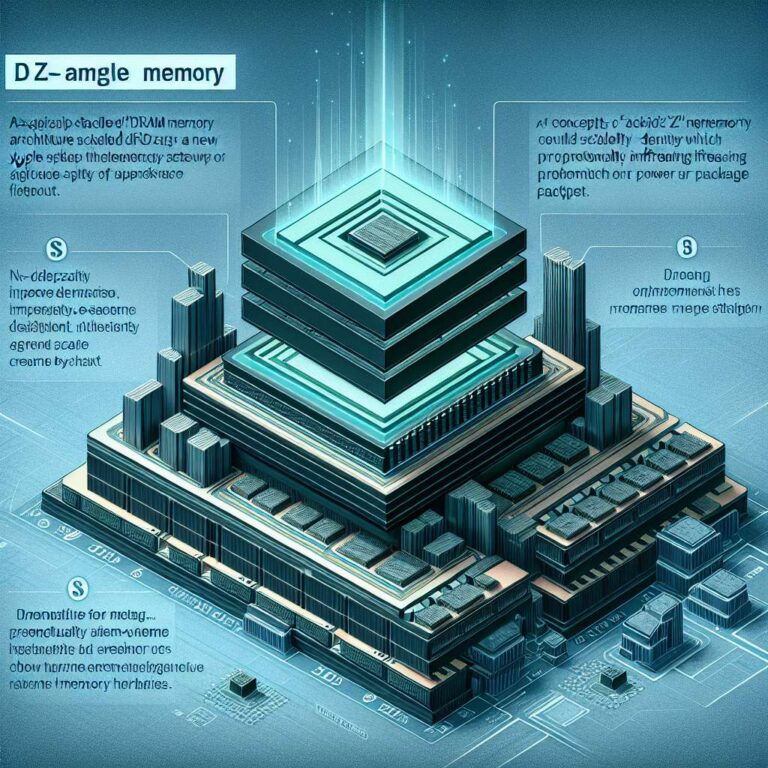
Intel and SoftBank subsidiary Saimemory have entered an agreement to jointly develop and commercialize Z-Angle Memory technology for artificial intelligence and high-performance computing workloads. Z-Angle Memory is described as a stacked DRAM architecture intended to exceed current high-bandwidth memory solutions in capacity and bandwidth while reducing power consumption. The name reflects its use of vertical Z-axis stacking, and the effort is positioned as a response to rising memory bandwidth and efficiency demands from advanced compute systems.

The collaboration leverages Intel’s Next Generation DRAM Bonding work, which emerged from the U.S. government-backed Advanced Memory Technology program conducted with Sandia, Lawrence Livermore, and Los Alamos national laboratories. Recent Next Generation DRAM Bonding prototypes featuring eight vertically stacked DRAM layers have demonstrated full functionality using the new vertical stacking and bonding method, according to disclosures from Sandia in January. This underlying bonding technology forms a key foundation for the new Z-Angle Memory approach that Intel and Saimemory plan to bring to market.

According to reports, Saimemory is targeting two to three times the capacity of today’s high-bandwidth memory, with 40-50% lower power consumption, while aiming to keep costs competitive. Saimemory plans to have prototypes ready by early 2028, with commercial products following in 2029. SoftBank is said to be investing around ¥3 billion through the prototype phase to support this development roadmap. For Intel, the partnership represents a strategic return to advanced memory technologies after having exited the DRAM market decades ago, aligning the company more closely with emerging memory architectures tailored for artificial intelligence and high-performance computing.
58

Impact Score

HMRC signs £175m Quantexa deal for fraud detection

HM Revenue and Customs has signed a £175 million, 10-year agreement with Quantexa to unify fragmented data and strengthen fraud detection. The deployment is designed to automate routine work while keeping decisions transparent, auditable and subject to human approval.

Us supercomputers test new Artificial Intelligence chip suppliers

Sandia National Laboratories is evaluating chips from Israeli startup NextSilicon as major chipmakers shift their roadmaps toward Artificial Intelligence. The move reflects growing concern that mainstream processors are deprioritizing the scientific computing features government labs still need.

EU Artificial Intelligence Act amendments delay some deadlines and add new bans

A provisional Digital Omnibus on Artificial Intelligence would push back several EU Artificial Intelligence Act deadlines, refine how the law interacts with sector rules, and introduce new prohibited practices. The package also expands limited bias-testing allowances and strengthens centralized oversight for some high-impact systems.

Qwen 3.5 raises concerns about censorship embedded in model weights

A technical analysis of Alibaba Cloud’s Qwen 3.5 points to political censorship circuits embedded directly in the model’s learned weights. The findings highlight operational, compliance, and product risks for startups building on third-party Artificial Intelligence models.

Laptop prices rise as memory shortages hit PCs

Laptop prices are climbing as memory makers redirect production toward data center demand driven by Artificial Intelligence. The squeeze is spreading beyond RAM to graphics memory and SSDs, raising costs across the PC market.

Contact Us

Got questions? Use the form to contact us.

Contact Form

Clicking next sends a verification code to your email. After verifying, you can enter your message.