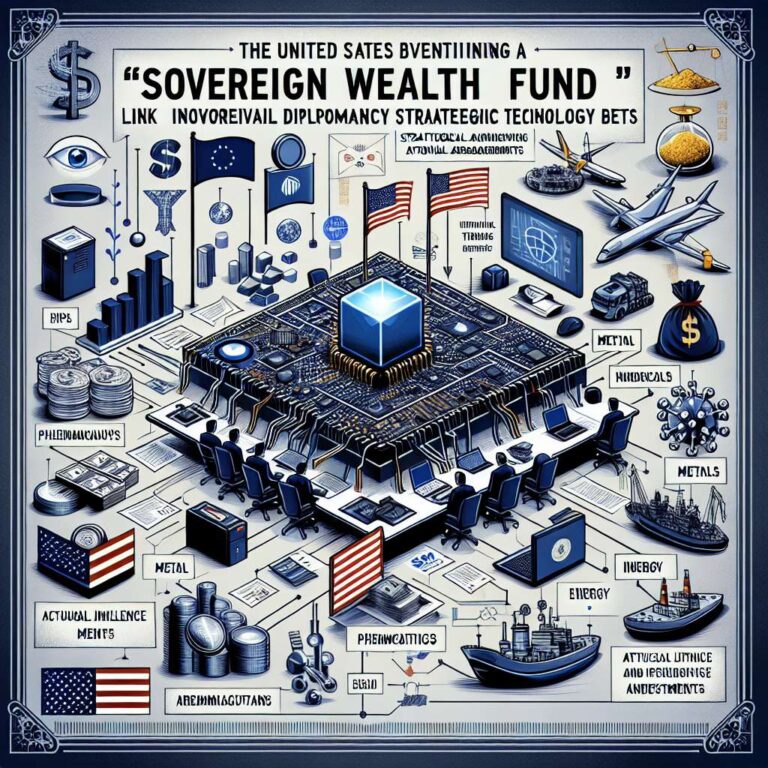
In an interview with Mercy A. Kuo, Winston Ma explains why the Trump administration’s approach to creating a United States sovereign wealth fund is unconventional. Rather than a legislatively chartered vehicle backed by surplus reserves, the fund is emerging from a trade deficit country through executive authority, built in a bottom-up, ad hoc, industrial policy-driven fashion. The goal, Ma notes, is to deploy sovereign capital as a strategic investment tool rather than a savings pool, a model that could redefine how sovereign wealth funds operate if it proves viable.
A key differentiator is reliance on foreign capital tied to tariff negotiations. Japan’s finance ministry plans an investment facility at a state-owned development bank to support a large package outlined under a recent tariff deal with Washington, targeting chips, metals, pharmaceuticals, energy and shipbuilding. The United States has also asked South Korea to help create a manufacturing cooperation enhancement fund to finance Korean firms expanding production in the United States. Together, these Japan-United States and Korea-United States partnerships would give the government a central role in reshaping domestic manufacturing, though their durability may hinge on pending legal challenges to tariffs at the U.S. Supreme Court.
Ma also points to governance complexities arising from the potential use of golden shares. Trump extended TikTok’s sell-or-ban deadline to January 2026, and suggested the United States sovereign wealth fund could become a key shareholder. As with the Nippon Steel-U.S. Steel deal, where the administration used a golden share veto to block operational changes at an Illinois plant, similar veto rights in TikTok could invite corporate governance friction as any restructuring navigates both United States and Chinese laws.
Artificial Intelligence investing is central to the fund’s strategy. On August 22, 2025, Intel agreed to an equity-for-grants transaction that gives the United States government a 10 percent stake in the company. Weeks later, Nvidia said it would take a stake in Intel to co-develop Artificial Intelligence data center chips. Ma links the sovereign wealth fund to the White House’s recently released Artificial Intelligence Work Plan and situates it within a broader global trend of sovereign investors channeling capital into Artificial Intelligence and data technologies for both returns and strategic aims.
Viability remains uncertain. In its early months, the United States sovereign wealth fund appeared as an assortment of stakes spanning Bitcoin, TikTok and the golden share tied to the Nippon Steel-U.S. Steel merger. Partnerships with Japan and South Korea, and potentially others like India, could help institutionalize the effort. Yet the Supreme Court’s fast-tracked review of key tariffs introduces significant risk; if the administration loses, the transpacific investment architecture underpinning this experiment could unravel.