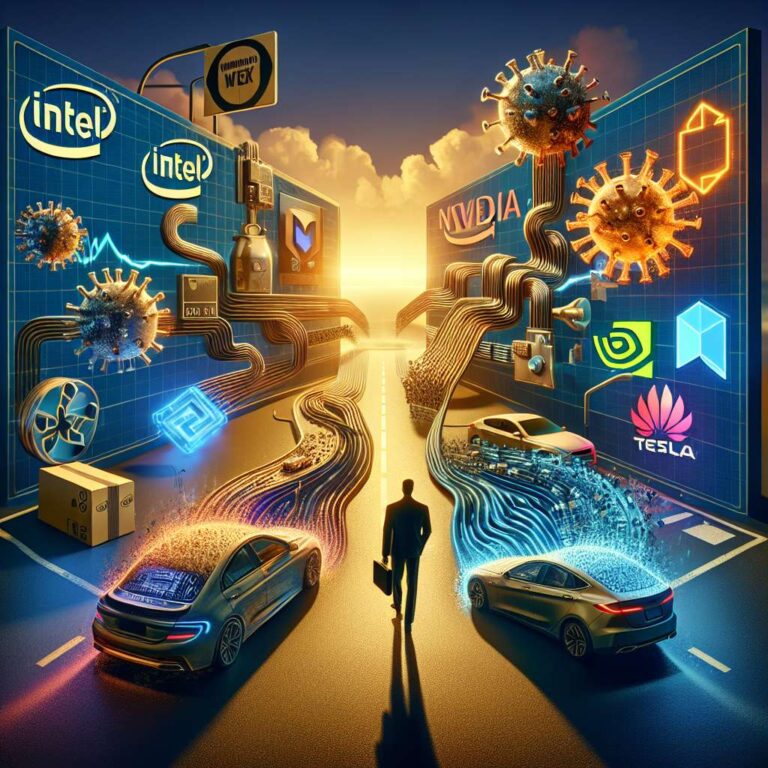
Intel, once a giant in the computer chip industry and a household name on personal computers, is making a dramatic exit from the automotive sector after conceding ground to industry rivals. The company will shut down its automotive business, laying off most staff in the division and winding down operations through its Advanced Driver Assistance Systems (ADAS) subsidiary, Mobileye. Intel confirmed it would fulfill existing contracts via Mobileye, but all new work in automotive chips will cease.
Over the past twenty years, Mobileye powered ADAS platforms for numerous global automakers, including BMW, Audi, General Motors, Ford, Nissan, and Honda. Even Tesla´s first Autopilot system and early Google Android Automotive systems relied on Mobileye processors. Despite this history, Mobileye´s share of the intelligent driving software-on-a-chip market has dwindled to just 2.9 percent, far behind leaders like Nvidia with 56 percent, Tesla at 18.8 percent, and Huawei at 16 percent. Most current Mobileye customers are now limited to Chinese groups Geely and FAW.
Intel´s decision comes amid more widespread hardship for the company. Its chip offerings for infotainment—such as the Atom lineup—have been surpassed by the superior performance and efficiency of Nvidia and Qualcomm´s silicon. The company has been losing share in other major markets as well, including data centers, where AMD and Nvidia have surged ahead amid a stagnating PC market. Intel has struggled to keep pace with the explosive growth of artificial intelligence, an area where Nvidia especially has taken a commanding lead. The exit from automotives leaves Qualcomm, Nvidia, and AMD as the dominant forces supplying chips for cars, while some carmakers like Tesla and Hyundai are developing their own SoC solutions. Intel´s retreat is less industry-shaking than it might have been five years ago, as competitors and new approaches are already well-established throughout the automotive tech ecosystem.