Around mid-September of last year, Intel and Nvidia announced a joint venture that teased the eventual use of GeForce RTX integrated graphics designs inside future Intel x86 system-on-chips, but that mainstream project has been quiet while Intel shifted its public focus to next generation Panther Lake-H mobile processors using in-house Arc Xe3 graphics. In a recent earnings call covering Q4 2025 results, Intel chief executive Lip-Bu Tan briefly revealed another collaboration with Nvidia that is aimed at the data center rather than consumer devices. Tan mentioned the existence of an in-progress enterprise grade processor design being co-developed with the Green Team, signaling a deepening partnership between the two companies in the server market.
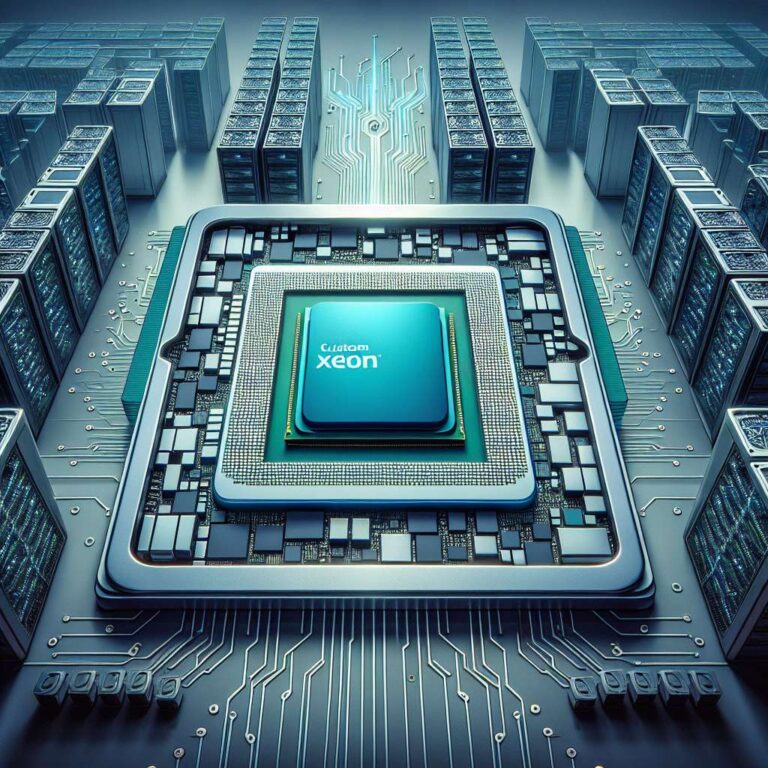
When discussing Intel’s ongoing simplification of its server product roadmaps, Tan disclosed that “we also continue to work closely with NVIDIA to build a custom Xeon fully integrated with their NVLink technology, to bring best-in-class x86 performance to AI host nodes.” This custom Xeon is intended to serve as a tightly coupled host for accelerated computing clusters that rely on Nvidia interconnects, and it positions Intel’s x86 platform as a central component in artificial Intelligence infrastructure built around Nvidia GPUs. Tan did not provide architectural details, and it is currently too early to say whether this cooperative design will be based on sixth or seventh generation Xeon technologies, leaving the precise timing and feature set of the chip unspecified.
Tan quickly pivoted from the Nvlink-enabled Xeon teaser to emphasize that Intel’s Xeon division is now focused on bringing 16-channel Diamond Rapids processors to market, framing them as a key step in the streamlined server roadmap. Looking further ahead, the Coral Rapids Xeon family is expected to resurrect Hyper-Threading for data center workflows, and Tan noted that accelerating the introduction of Coral Rapids is a main corporate goal. Before Intel released its Q4 ’25 financial results, industry speculation had suggested a second half of 2027 release window for Coral Rapids, which highlights how the newly disclosed custom Nvlink Xeon must fit into an already crowded multi-year server roadmap that spans Diamond Rapids, Coral Rapids, and Intel’s broader artificial Intelligence strategy.