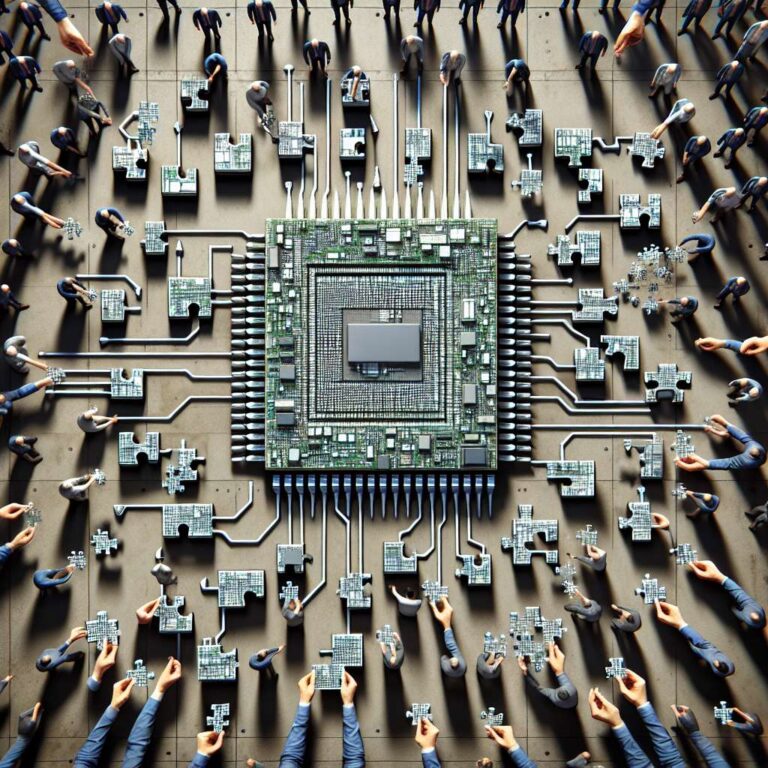
The semiconductor industry in 2025 finds Intel at a critical inflection point as it battles to reclaim competitiveness versus leaders like NVIDIA, TSMC, and AMD. The company´s sweeping restructuring, which includes a 15% workforce reduction, consolidation of assembly operations in Costa Rica, and the halting of several projects across Europe, underscores the severity of Intel´s transformation. These moves trimmed its core workforce to 75,000 and delivered a 13% year-over-year reduction in research and development and operating expenses. Despite a resulting multi-billion-dollar restructuring charge that deepened quarterly losses under GAAP, Intel managed a modest improvement in its non-GAAP operating margin, though margins remain thin and performance volatile.
In the context of industry-wide capital requirements, Intel´s pivot is ambitious but fraught with risk. The company is prioritizing ´Smart Capital´—sharply curtailing capital expenditures while also scaling back R&D to preserve cash flow. Such capital discipline saw 2025 CAPEX marked significantly below TSMC’s aggressive expansion. However, this forced efficiency could endanger long-term innovation, especially as rivals double down on artificial intelligence accelerators and high-performance computing. Intel’s own next-generation platforms—Clearwater Forest and Jaguar Shores—are yet to prove themselves, and the company’s cutting-edge 18A and 14A manufacturing nodes must demonstrate performance and cost competitiveness. Currently, the 18A process carries a significant cost premium compared to TSMC’s offerings, limiting Intel’s immediate appeal as a foundry partner to leading external clients.
Competitive dynamics and geopolitical risks amplify the challenge. While U.S. export controls may temporarily hamper Asian competitors, potential Chinese restrictions on materials necessary for Intel’s advanced nodes introduce further supply chain uncertainty. Simultaneously, Intel’s declining PC market share—its lowest since 2002—contrasts with only modest gains in data center revenue, as Arm-based solutions continue to erode its dominance. Although a few analysts see bright spots if Intel can secure high-profile design wins and achieve break-even status in its foundry business by 2027, most urge caution, reflected in a majority ´Hold´ rating and tepid price targets. In sum, Intel´s turnaround rests on flawless execution in advanced manufacturing, innovation leadership in artificial intelligence hardware, and strict financial discipline. The restructuring resets the baseline, but with industry competition as ruthless as ever, Intel faces a long, uncertain road back to market leadership.