
How people are using ChatGPT for financial advice

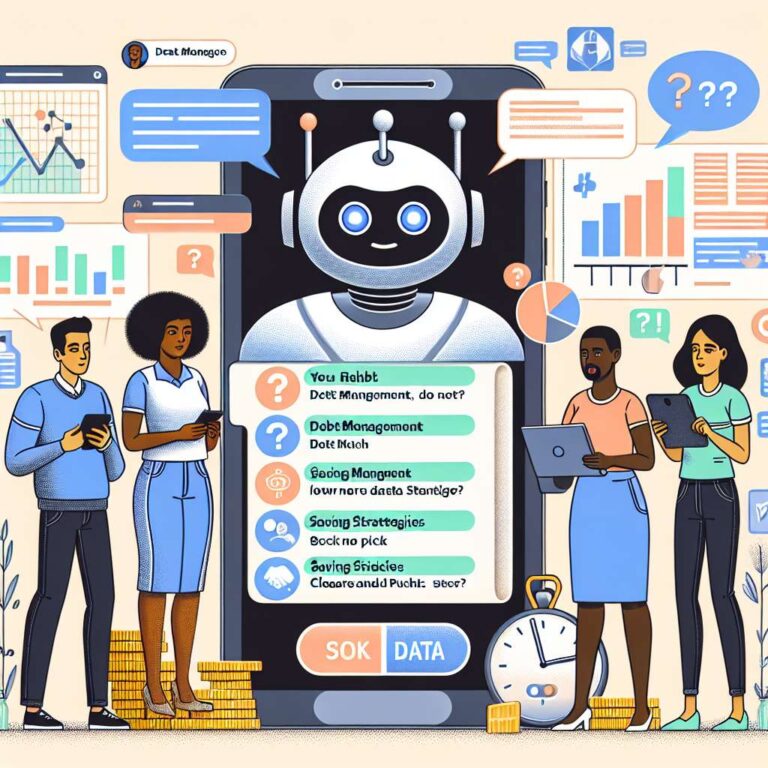
More people are turning to generative Artificial Intelligence chatbots for financial advice, whether for debt management, better saving strategies or stock picks.

The article reports that increasing numbers of people are turning to ChatGPT and other generative Artificial Intelligence chatbots for financial advice. It specifically notes users consult these tools for debt management, for improving saving strategies and for suggestions about stock picks. Those three use cases are presented as the primary areas where people are seeking help from generative Artificial Intelligence tools.

Beyond those broad categories of use, the article does not provide detailed figures or breakdowns. Information such as how many people are consulting chatbots, changes over time in usage, demographic profiles of users, or comparisons between different services is Not stated. The piece does not specify whether the advice users receive is typically actionable, accurate, or followed, and it does not quantify outcomes such as debt reduction, increases in savings, or investment performance attributable to chatbot guidance.

The article also does not state details about platform practices, regulatory responses, or expert perspectives. It does not provide information on privacy or security measures, fee structures, disclaimers, or any formal oversight of chatbot-provided financial guidance. Specific user stories, company statements, methodological descriptions of how advice is generated, and any measurement of risks or harms are Not stated. Readers seeking statistics, case studies, expert commentary, or regulatory context will find those elements missing from the article as provided.
65

Impact Score

Artificial Intelligence platform choice becomes a board decision

Competition among leading Artificial Intelligence providers is shifting from model benchmarks to control of broader platforms and ecosystems. That change turns large language model selection into a long term strategic decision for boards, not just engineering teams.

Memory makers see shortages easing in late 2028

Memory manufacturers expect shortages to continue until the end of 2028, with supply and demand returning to balance afterward. Producers are also reassessing whether to extend capacity expansion beyond plans already tied to current demand.

EuroHPC JU signs contract for Artificial Intelligence supercomputer HammerHAI

EuroHPC JU has signed a contract with HPE to deploy HammerHAI, the first new standalone supercomputer under its Artificial Intelligence Factories initiative. The system is planned for HLRS in Germany and is designed to expand computing capacity for Artificial Intelligence, machine learning, and data science.

MSI warns of gpu shortages and expands ddr4 output

MSI says tightening component supply tied to Artificial Intelligence demand is pressuring gaming hardware pricing and availability. The company is also shifting motherboard production toward DDR4 as DDR5 shortages persist.

NVIDIA launches BlueField-4 STX storage architecture

NVIDIA introduced BlueField-4 STX, a modular storage reference architecture built to support long-context reasoning for agentic Artificial Intelligence. The design aims to keep data close to compute and improve responsiveness across inference, training and analytics.

Contact Us

Got questions? Use the form to contact us.

Contact Form

Clicking next sends a verification code to your email. After verifying, you can enter your message.