
America´s gun crisis and how artificial intelligence video models work

This edition highlights gun violence as the leading cause of death for American children and explains how artificial intelligence video models are producing realistic clips while creating energy and misinformation challenges.

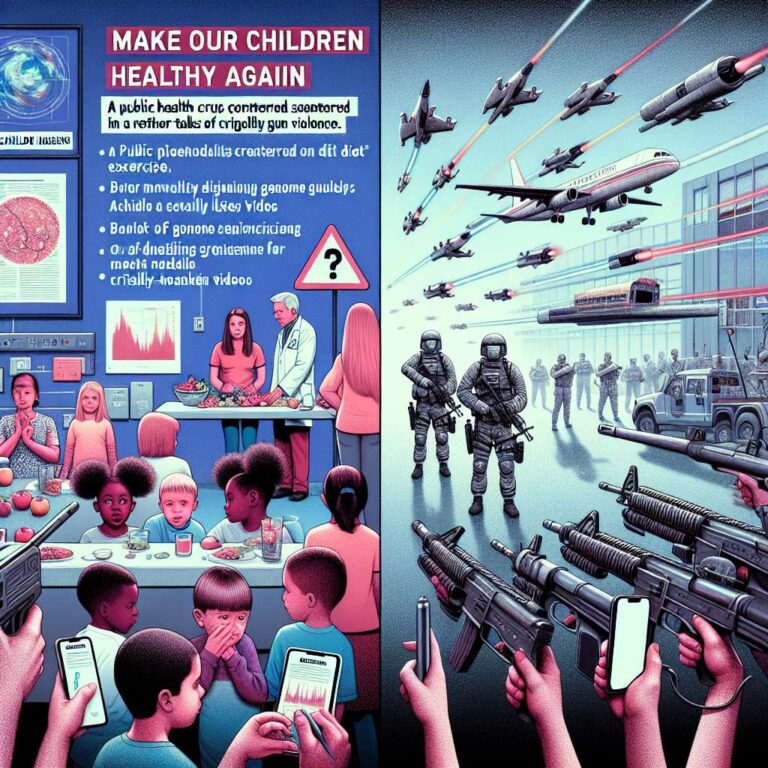
The newsletter opens by examining a recent strategy from the Trump administration titled Make Our Children Healthy Again, which emphasizes diet and exercise for young people but omits the leading cause of death for American children and teenagers: gun violence. The coverage notes that high-profile school shootings this week underscore the gap between policy messaging and reality, and experts quoted in the piece call for treating gun violence as what it is, a public health crisis. The report and commentary are presented as part of ongoing coverage that connects child health outcomes to broader social and policy failures.

The edition also explains how artificial intelligence models generate video and why the technology has become so prominent. It highlights that in the last nine months OpenAI made Sora public, Google DeepMind launched Veo 3, and the startup Runway released Gen-4, each capable of producing clips that are almost impossible to distinguish from filmed footage or CGI. The piece warns of downsides: creators are competing with artificial intelligence slop, social media feeds are filling with faked news footage, and video generation consumes a large amount of energy, many times more than text or image generation. The explainer frames these developments as part of MIT Technology Review Explains, aiming to clarify the technical and societal implications.

The newsletter profiles MIT Technology Review´s 2025 Innovator of the Year, Sneha Goenka, an assistant professor of electrical and computer engineering at Princeton. The profile focuses on a system she helped build to speed genome sequencing for critically ill children, noting that up to a quarter of children entering intensive care have undiagnosed genetic conditions and that standard sequencing can take up to seven weeks, which is often too slow. The edition also curates must-reads across tech and policy, including an undisclosed revised deal between OpenAI and Microsoft, a child dying from a measles complication in Los Angeles, Ukrainian drone attacks that triggered internet blackouts in Russia, and a discussion of what Africa needs to do to become a major artificial intelligence player.
65

Impact Score

Google adds conversational ads to Artificial Intelligence mode

Google is rolling out new ad features in Artificial Intelligence Mode aimed at helping businesses, especially smaller advertisers, appear in generative search experiences. The additions bring conversational responses, recommended business listings and lead-generation tools directly into search interactions.

Google shifts its scientific Artificial Intelligence focus

Google is presenting a broader vision for scientific Artificial Intelligence that leans more heavily on agentic, general-purpose systems while still maintaining specialized tools. The shift suggests changing priorities in how the company sees Artificial Intelligence contributing to research.

General-purpose Artificial Intelligence tackles open math problem

OpenAI’s GPT-5 reportedly helped mathematician Ernest Ryu solve a long-standing convex optimization problem now under formal verification. The result points to a broader shift from Artificial Intelligence as a math assistant toward Artificial Intelligence as a source of original research.

Suno faces lawsuit from The American Dollar

Suno has been sued by production duo The American Dollar, who allege its generative Artificial Intelligence music service has damaged their sync licensing business. The case could sharpen the fair use fight around whether Artificial Intelligence training causes direct market harm.

Colorado Artificial Intelligence bias law faces federal challenge

The US Department of Justice joined xAI in challenging Colorado’s law on discrimination in high-risk Artificial Intelligence systems, casting consumer protections as ideological overreach. Critics argue the attack weakens accountability for hiring, housing, and healthcare tools that can produce discriminatory outcomes.

Contact Us

Got questions? Use the form to contact us.

Contact Form

Clicking next sends a verification code to your email. After verifying, you can enter your message.