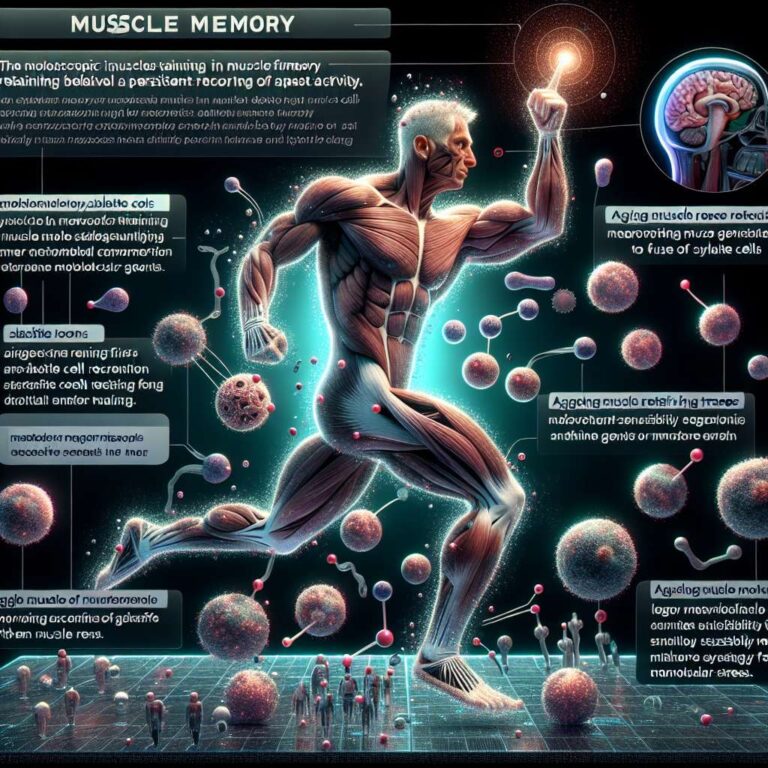
Muscle memory is often used to describe the brain’s recall of coordinated movement, but scientists now show our muscles themselves also remember. Skeletal muscle fibers are long, multinucleated cells that grow not by dividing, but by recruiting muscle satellite cells that fuse and contribute additional nuclei. Those nuclei can persist during inactivity, helping muscles rekindle growth more quickly when training resumes. Inside these cells, small molecular shifts continue long after a workout ends, gradually encoding a record of prior activity.
Adam Sharples, a muscle scientist at the Norwegian School of Sport Sciences, studies what he calls epigenetic muscle memory. Exercise alters gene expression without changing DNA, often by removing methyl groups from regions that control growth-related genes, making them more likely to turn on and support hypertrophy. In 2018, Sharples’s lab provided the first evidence that human skeletal muscle retains an epigenetic memory of prior training, enabling faster gains after a pause that can last months, possibly years. Subsequent work in mice and older adults has echoed these results, indicating that even aging muscle can recall past workouts and respond more efficiently when activity resumes.
Muscles also appear to remember periods of loss. Sharples points to findings suggesting that young human muscle carries a positive memory of atrophy, recovering well after an initial bout and not worsening with repetition. In contrast, aged muscle in rats shows a negative memory of repeated wasting, becoming more susceptible to greater loss and heightened molecular stress. Illness can imprint a similar negative signature: in a study of breast cancer survivors more than a decade after treatment, participants’ muscles exhibited an epigenetic profile resembling that of much older people. Encouragingly, five months of aerobic training shifted those patterns back toward those seen in healthy, age-matched women. The takeaway is that positive muscle memories can counter negative ones. The more we use our muscles, the better they store beneficial adaptations that can serve us later. The piece is by Bonnie Tsui, who notes this body of research in the context of her forthcoming book On Muscle: The Stuff That Moves Us and Why It Matters.