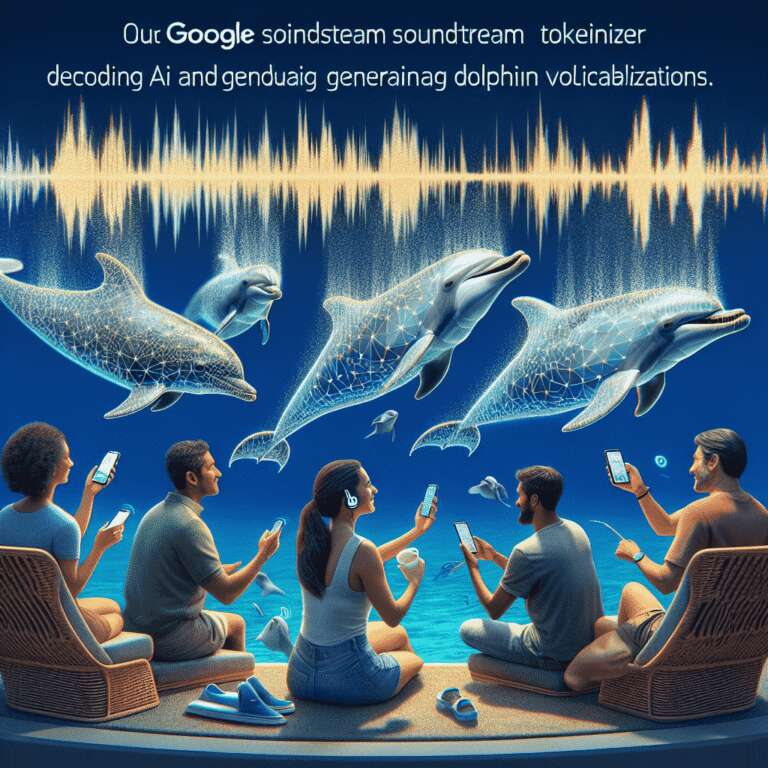
Google has announced a significant breakthrough in the field of interspecies communication with the development of DolphinGemma, a large language model specifically trained to interpret and generate dolphin sounds. This new Artificial Intelligence system, built on the Gemma architecture that also powers Google’s Gemini models, leverages advanced audio technology to analyze dolphin vocalizations. By sifting through the Wild Dolphin Project’s extensive acoustic database of wild Atlantic spotted dolphins, DolphinGemma is capable of processing complex audio sequences and identifying patterns that could form the basis of a shared human-dolphin vocabulary.
The DolphinGemma system operates using Google’s SoundStream tokenizer, which efficiently represents the intricacies of dolphin sounds before feeding them into the model’s architecture. Sized at approximately 400 million parameters, the model is optimized to run on consumer-grade devices, such as Google’s Pixel smartphones. The Wild Dolphin Project, in collaboration with Georgia Tech and Google, utilizes these phones during real-time underwater field research. This enables researchers to analyze dolphin communication on site, linking specific sound patterns to observed behaviors such as social bonding, aggression, and courtship.
Beyond passive observation, Google and its partners are actively exploring two-way communication through the Cetacean Hearing Augmentation Telemetry (CHAT) system. CHAT employs synthetic whistles associated with specific objects or rewards, with the aim of encouraging dolphins to mimic these sounds to request items. This method, combined with DolphinGemma’s capability to uncover hidden structures and potential meanings in both synthetic and natural dolphin sounds, sets the foundation for a practical vocabulary shared between species. The use of standard smartphones eliminates the need for custom hardware, reducing cost, size, and power requirements, and making this technology accessible and sustainable for extended oceanic research. Ultimately, DolphinGemma marks a pivotal step in bridging the communication gap between humans and dolphins, hinting at future possibilities for interspecies dialogue powered by Artificial Intelligence.