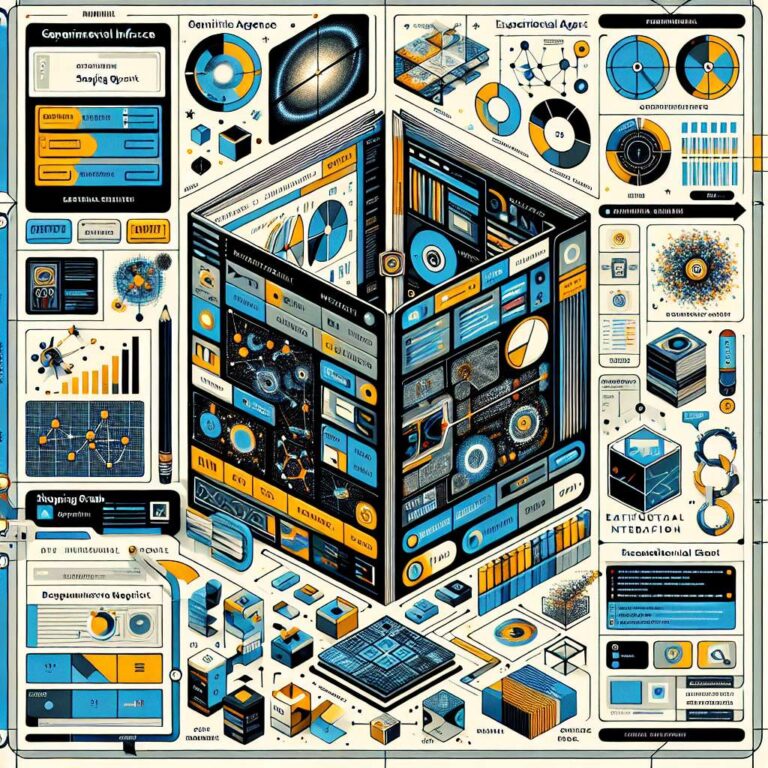
Google announced Gemini 3, a major upgrade to its flagship multimodal model that emphasizes stronger reasoning and more fluid cross-modal capabilities for voice, text, and images. The model introduces generative interfaces that let Gemini 3 choose the best output format for a prompt rather than defaulting to plain text. For example, travel queries can produce a website-like interface with modules, images, follow-up prompts and clickable options, while explanations may be rendered as diagrams or simple animations when visual output is more effective. Josh Woodward, vice president of Google Labs, Gemini, and AI Studio, described the visual layouts as immersive, magazine-style views designed to invite further user input.
Gemini 3 also includes an experimental Gemini agent intended to handle multi-step workflows inside the app. The agent can connect to services such as Google Calendar, Gmail, and Reminders and, once granted permission, execute tasks like organizing an inbox or managing schedules. It decomposes work into discrete steps, shows progress in real time, and pauses for user approval before continuing. Google plans to make the agent available on the web for Google Artificial Intelligence Ultra subscribers in the United States starting November 18. The company frames the approach as similar to ‘vibe coding’, where users state an end goal and the model assembles the interface or code needed to reach it.
The update deepens Gemini’s integration across Google products. A limited group of Google Artificial Intelligence Pro and Ultra subscribers can switch to Gemini 3 Pro, a reasoning-focused variation for more thorough AI-generated summaries in Search. For shopping, Gemini will draw from the Shopping Graph, which Google says contains more than 50 billion product listings, to assemble interactive product recommendation guides with prices and details without redirecting users offsite. Google also introduced Google Antigravity, a development platform for single-prompt software generation that consolidates code, tools, and workflows. Industry developers responding to the launch noted improvements in visual understanding, code generation, and long-task performance, and some plan to integrate the model pending deeper testing.